
Sales & Follow Up
What Is the SIGNAL Method? The Sales Framework Built for Warm Prospects
What Is the SIGNAL Method? The Sales Framework Built for Warm Prospects
A doctor walks into the exam room without opening your chart. By minute 10 you're irritated. By minute 20 you don't trust her. The same thing is happening on most sales calls in 2026, and it's killing more deals than bad pricing ever has.
A doctor walks into the exam room without opening your chart. By minute 10 you're irritated. By minute 20 you don't trust her. The same thing is happening on most sales calls in 2026, and it's killing more deals than bad pricing ever has.
TLDR
SIGNAL is the proprietary 6-stage sales framework reFOCUS uses for every Discovery Call. It exists because every other modern sales framework (SPIN, Challenger, Sandler, Solution Selling) was built for one specific scenario: a cold prospect who has never heard of you. That's not who's booking calls with you in 2026. Your prospects have been reading your content for weeks, taking the Diagnostic, watching your videos. They're warm. The SIGNAL Method™ is built for warm prospects. The salesperson's first job isn't to introduce. It's to read what marketing already wrote and continue the story from there.
INTRODUCTION
A doctor walks into the exam room.
She doesn't open your chart.
She doesn't look at the intake form you filled out twice on the way in. She doesn't glance at the labs that came back yesterday. She just sits down, smiles, and says, "So, what brings you in today?"
You've been a patient at this practice for six months. They have your full history on file. And she's asking you to start over.
How do you feel?
That's how most prospects feel on most sales calls in 2026. The salesperson walks in cold to a warm prospect. Asks the same questions the website already answered. "Discovers" things the prospect typed into the Diagnostic before they ever clicked the booking link.
By minute 10 the prospect is irritated. By minute 20 they don't trust the company. By minute 30 the deal is dead, and the salesperson has no idea why.
The problem isn't the salesperson's skill. The problem is the framework they're using.
Every major sales methodology (SPIN, Challenger, Sandler, Solution Selling) was built for one specific scenario: a cold prospect who has never encountered your brand. Someone who has to be educated from zero. Someone whose trust must be earned from scratch in a single 45-minute conversation.
That is not who's booking calls with service businesses anymore.
In 2026, your prospects have already watched three of your videos. They've read four of your articles. They've scored themselves on a Diagnostic. They've opened twelve emails and read a case study about a business that looks remarkably similar to theirs. By the time they hit "book a call," they're not cold. They're warm.
And every cold-call framework in the world is the wrong tool for a warm conversation.
That's why we built our own.

KEY TAKEAWAYS
Most sales frameworks were built for cold prospects. Yours aren't cold anymore. Treating them like they are signals you weren't paying attention.
Marketing sends signals. The Diagnostic score is a signal. Content consumed is a signal. The trigger that brought them to the call is a signal.
A salesperson who walks in without reading those signals is a doctor who didn't read the chart. The trust gap opens before they say a word.
SIGNAL is six stages: Source Intelligence, Intent Discovery, Gap Mapping, Need Alignment, Advance or Nurture, Leverage.
The first stage happens before the call even starts. That's not optional. That's the entire premise of the framework.
Done right, SIGNAL closes the chasm between what marketing built and what sales experiences. Done wrong, you keep losing deals you should be winning and you can't figure out why.

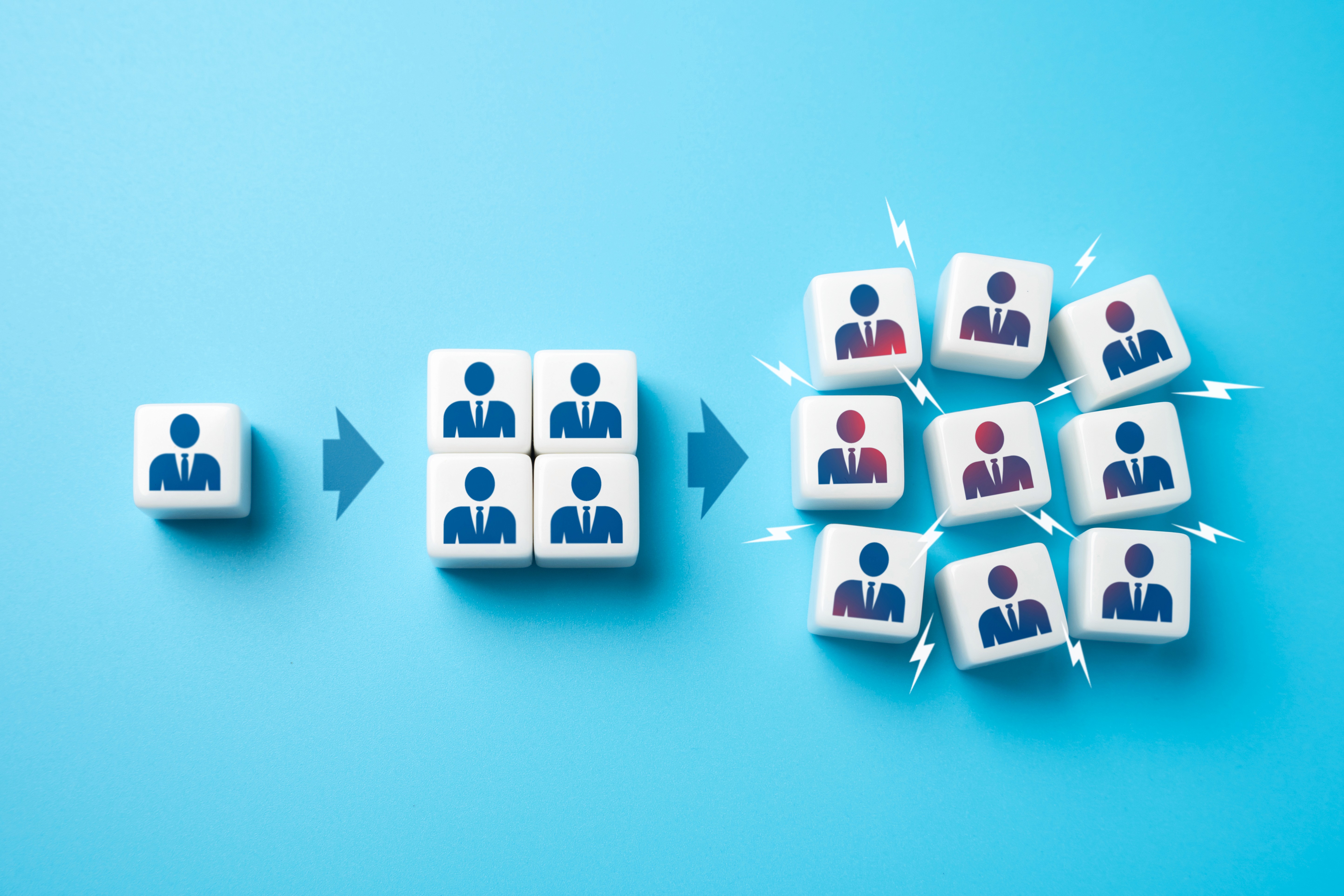
Why Did We Build Our Own Sales Framework?
We didn't set out to.
We tried the others first. SPIN. Challenger. Sandler. The frameworks that have trained salespeople for forty years. They're not bad. They're actually really good at what they were designed to do.
The problem is what they were designed to do.
Every one of them assumes the same starting point: a cold prospect who has never heard of you. Someone who needs to be educated from zero. Someone whose trust has to be earned in a single conversation from the ground up. That assumption is baked into every page of every playbook.
In 1985, that was true. In 2005, it was mostly true. In 2026, it's almost never true.
The prospects booking calls with us have already been in our world for weeks. They watched three videos. They read four articles. They took the UNMISSABLE Diagnostic and scored a 41 on Authority. They opened twelve emails. They watched a case study about a business that looks weirdly similar to theirs.
By the time they hit "book a call," they've made up their mind about most of what a cold-call framework is designed to discover.
If we walked into that conversation and started "discovering" them from zero, we'd be insulting twelve weeks of relationship. We'd be telling them, with our questions, that nothing they consumed actually mattered. That the content was a brochure, not a relationship. That the conversation starts over instead of picks up.
So we built our own framework.
Marketing sends signals. Sales reads them.
That's the entire principle. Six stages. Each one is built around it.
What Does SIGNAL Stand For?
Six stages:
S is Source Intelligence I is Intent Discovery G is Gap Mapping N is Need Alignment A is Advance or Nurture L is Leverage
The first one happens before the call starts. That's not a small detail. That's the whole point.
Most sales frameworks treat the conversation as the beginning. We treat the conversation as the middle. The beginning happened ten weeks ago, when the prospect typed a question into Google and landed on one of our articles. Everything since then has been signal.
If you can't read what marketing wrote, you don't have a sales process. You have a guessing process with a script.
S: What Is Source Intelligence?
Source Intelligence is the part where you stop pretending you don't know who's calling.
Before any reFOCUS team member walks into a Discovery Call, they spend 5 to 10 minutes reading the file. Not skimming. Reading.
We pull the prospect's CRM record and look at five things:
Their Diagnostic score and which of the three pillars scored lowest
The specific content they consumed, which articles, which videos, which emails opened
How they entered the ecosystem, referral or paid ad or organic search or podcast
How long they've been in the ecosystem (3 weeks tells a very different story than 11 weeks)
The trigger event that produced this specific call (something happened recently, find it)
That's it. Five inputs. Ten minutes of prep.
Almost no salesperson does this.
Most walk in cold to a warm prospect. They open their notebook to a blank page. They ask "so what brings you in?" like the prospect didn't already answer that question on the booking form.
That single question, asked without context, kills more deals than people realize. Because the prospect can feel the difference between a salesperson who walked in prepared and one who didn't. The unprepared one signals "you're a number to me." The prepared one signals "I've been paying attention."
Picture two doctors. One opens your chart, sees yesterday's bloodwork, and says, "Your iron's still low. Tell me what's been happening since last visit." The other walks in and says, "so what's going on?"
You'd never go back to the second one.
Source Intelligence is the chart. Read it.
I: What Is Intent Discovery?
Intent Discovery is the first 10 to 15 minutes of the live conversation. It has exactly one job: find the burning platform.
The burning platform is the specific thing that changed in the last 30 to 60 days that made this call feel necessary right now. Not "we've been thinking about marketing for a while." Something specific. A bad quarter. A lost referral source. A competitor showing up everywhere. A new partner asking hard questions in board meetings. A number that finally went the wrong way long enough to matter.
Something happened. Find it.
The question is never "what are you looking for?"
That question invites a feature request. "We need help with social media." "We need more leads." "We need a website refresh." Those are symptoms, not stories. Buying decisions don't get made on symptoms. They get made on the story underneath the symptom.
The question is: "What made you reach out today, specifically? What changed?"
That question invites a story. And the story is where the truth lives. The villain. The stakes. The turning point. The prospect didn't book a call because they "wanted marketing." They booked a call because something happened that made the cost of doing nothing finally feel higher than the cost of taking action.
Find that thing. Document it in real time. The rest of the call gets built on it.
G: What Is Gap Mapping?
Gap Mapping is where the framework gets concrete.
Every service business we work with is short in one of three pillars. Awareness. Authority. Acquisition. The 3A framework. We use the live conversation to figure out which gap is the actual one.
Awareness gap means nobody knows you exist. You're the best-kept secret in your market. Referrals are your entire pipeline. If you stopped getting referred, the business goes quiet.
Authority gap means people know you exist but they don't yet trust you as the expert. Your content is generic. Your positioning is fuzzy. You're competing on price because nothing about you has given anyone a reason to compete on anything else.
Acquisition gap means you have presence and trust but the conversion infrastructure is broken. Leads come in, then disappear. Calls happen, then ghost. Proposals get sent, then go silent. The pipeline has holes and the deals leak out the bottom.
Here's the part most owners get wrong: they think they have all three problems. Almost nobody does. There's almost always one pillar that's the actual bottleneck, and fixing the other two without fixing it produces nothing.
Gap Mapping is how we find the real one. The Diagnostic gives us a starting point. The live conversation gives us the rest.
N: What Is Need Alignment?
Need Alignment is the moment in the call where everything has to feel obvious.
We reflect back what the prospect just told us, but in a structure they can finally see clearly. We use their language, not ours. We name the villain they named. We point at the turning point they described. We connect those specific things to the specific gap we just mapped.
It sounds kinda like this:
"Based on everything you just shared, here's what I see. You've built something genuinely good. You're getting referred consistently. But your business is one referral source away from a real problem, and you already know it. The villain isn't your service. The villain is that you're invisible to anyone who didn't already meet you in person. That's an Awareness gap. Does that match your read?"
If the prospect nods, we keep going. If they push back, we adjust until the picture they see is the picture they actually live in.
This is not a closing technique. This is a real moment. Either the gap is what we said it is, or it isn't. If we got it wrong, we want to know now, not three months into a contract.
When the alignment is real, prospects sometimes go quiet for a beat. Not because we sold them. Because someone finally said the thing out loud.
A: What Is Advance or Nurture?
This is the stage most sales frameworks lie about.
Most frameworks tell you to always be closing. Always be moving the deal forward. Always be advancing. That's how you end up in a contract with a prospect who wasn't actually ready, and three months later they're churning, frustrated, and writing a review that costs you ten more deals.
SIGNAL is honest about this. Before we advance, we check three criteria:
Urgency. Is something actually pushing them to make a change right now, or could this conversation just as easily happen in six months?
Budget awareness. Do they understand what this category of work actually costs at the level they need it done?
Decision authority. Are they the person who can say yes, or are they going to "talk to a partner" who hasn't been in the conversation?
All three present, we advance. We make the offer. We frame the investment. We start the proposal.
Any one missing, we nurture. Structured nurture, with specific content built for whichever criterion was the gap. We don't make a watered-down version of the offer at a reduced price. We don't make a sale we shouldn't make. The Value Stack Protocol™ kicks in. We hold the line on price and we hold the line on fit.
This is where sales discipline actually shows up. The deal you should walk away from is the one you save by walking away.
L: What Is Leverage?
Leverage is the stage almost no sales framework includes, and it's the one that compounds.
The first 30 days of a new client relationship are the highest-energy period the relationship will ever have. They're motivated. They're showing up. They're seeing early wins. That window is when Leverage happens.
The Leverage Conversation is direct: "You're 30 days in. You're seeing momentum. Who else in your world needs this? Specifically. Three names."
We watch for three triggers that signal it's time to run that conversation:
They report a specific win
They send a piece of unprompted positive feedback
They reference how their business has changed since they started
Hit any of those, and the referral engine gets installed right there. Not in six months when the relationship has cooled. Right now, while the energy is hot.
Most agencies wait for referrals to happen. We build the referral conversation into the system at the moment it's most likely to land. That's why our clients send referrals at rates most agencies never see. It's not because they love us more than other clients love their agencies. It's because we asked at the right time.
Why Does the SIGNAL Method Actually Convert?
Three reasons.
First, the prospect feels different on a SIGNAL call. They feel seen. They feel like the conversation picked up where the content left off instead of starting over. That alone changes the energy of the room before anyone has talked about pricing.
Second, the framework prevents the two most common conversion mistakes at the same time: advancing prospects who shouldn't advance, and nurturing prospects who should advance. Most sales processes get this wrong in both directions. SIGNAL forces the discipline.
Third, the Leverage stage compounds. Every closed client becomes a source of three more conversations within the first 30 days. The flywheel turns. The pipeline fills from inside the existing client base, not just from cold marketing.
The result is a sales process that closes more of what comes in and produces more of what doesn't.
What This Actually Means for You
If you're running discovery calls with no preparation and no framework, you're losing deals you should be winning. Not because your offer is wrong. Because your conversation is wrong.
If you're using SPIN, Challenger, or Sandler with a prospect who's already been in your world for two months, you're treating a warm prospect like a cold one. They feel it. The deal dies and you don't know why.
The fix isn't a sharper script. The fix is reading the signals before you walk into the room and continuing the story instead of starting it over.
Marketing sends signals. Sales reads them.
The question worth sitting with: when a warm prospect walks into your sales conversation tomorrow, will the person on your side of the table know what your marketing already told them? Or will that person ask the prospect to start at the beginning, again?

CONCLUSION
You can't sell to a warm prospect with a cold-call framework. The math doesn't work. Twelve weeks of content consumption is twelve weeks of signal you're either reading or ignoring, and the prospect can feel which one you chose the moment you open your mouth.
The doctor who reads the chart earns trust before she says a word. The doctor who walks in cold loses it the same way.
If your sales calls feel disconnected from your marketing, it's not a closing problem. It's a SIGNAL problem.
Book a Discovery Call and see what reading the file looks like in real time. You'll know within the first five minutes whether we did our homework. That's the difference. And once you experience it, going back to anything else feels like seeing a doctor who didn't open the chart.
Stay Inspired
Get fresh design insights, articles, and resources delivered straight to your inbox.
Latest Blogs


Sales & Follow Up
What Is the SIGNAL Method? The Sales Framework Built for Warm Prospects
What Is the SIGNAL Method? The Sales Framework Built for Warm Prospects
A doctor walks into the exam room without opening your chart. By minute 10 you're irritated. By minute 20 you don't trust her. The same thing is happening on most sales calls in 2026, and it's killing more deals than bad pricing ever has.
A doctor walks into the exam room without opening your chart. By minute 10 you're irritated. By minute 20 you don't trust her. The same thing is happening on most sales calls in 2026, and it's killing more deals than bad pricing ever has.
TLDR
SIGNAL is the proprietary 6-stage sales framework reFOCUS uses for every Discovery Call. It exists because every other modern sales framework (SPIN, Challenger, Sandler, Solution Selling) was built for one specific scenario: a cold prospect who has never heard of you. That's not who's booking calls with you in 2026. Your prospects have been reading your content for weeks, taking the Diagnostic, watching your videos. They're warm. The SIGNAL Method™ is built for warm prospects. The salesperson's first job isn't to introduce. It's to read what marketing already wrote and continue the story from there.
INTRODUCTION
A doctor walks into the exam room.
She doesn't open your chart.
She doesn't look at the intake form you filled out twice on the way in. She doesn't glance at the labs that came back yesterday. She just sits down, smiles, and says, "So, what brings you in today?"
You've been a patient at this practice for six months. They have your full history on file. And she's asking you to start over.
How do you feel?
That's how most prospects feel on most sales calls in 2026. The salesperson walks in cold to a warm prospect. Asks the same questions the website already answered. "Discovers" things the prospect typed into the Diagnostic before they ever clicked the booking link.
By minute 10 the prospect is irritated. By minute 20 they don't trust the company. By minute 30 the deal is dead, and the salesperson has no idea why.
The problem isn't the salesperson's skill. The problem is the framework they're using.
Every major sales methodology (SPIN, Challenger, Sandler, Solution Selling) was built for one specific scenario: a cold prospect who has never encountered your brand. Someone who has to be educated from zero. Someone whose trust must be earned from scratch in a single 45-minute conversation.
That is not who's booking calls with service businesses anymore.
In 2026, your prospects have already watched three of your videos. They've read four of your articles. They've scored themselves on a Diagnostic. They've opened twelve emails and read a case study about a business that looks remarkably similar to theirs. By the time they hit "book a call," they're not cold. They're warm.
And every cold-call framework in the world is the wrong tool for a warm conversation.
That's why we built our own.
KEY TAKEAWAYS
Most sales frameworks were built for cold prospects. Yours aren't cold anymore. Treating them like they are signals you weren't paying attention.
Marketing sends signals. The Diagnostic score is a signal. Content consumed is a signal. The trigger that brought them to the call is a signal.
A salesperson who walks in without reading those signals is a doctor who didn't read the chart. The trust gap opens before they say a word.
SIGNAL is six stages: Source Intelligence, Intent Discovery, Gap Mapping, Need Alignment, Advance or Nurture, Leverage.
The first stage happens before the call even starts. That's not optional. That's the entire premise of the framework.
Done right, SIGNAL closes the chasm between what marketing built and what sales experiences. Done wrong, you keep losing deals you should be winning and you can't figure out why.
Why Did We Build Our Own Sales Framework?
We didn't set out to.
We tried the others first. SPIN. Challenger. Sandler. The frameworks that have trained salespeople for forty years. They're not bad. They're actually really good at what they were designed to do.
The problem is what they were designed to do.
Every one of them assumes the same starting point: a cold prospect who has never heard of you. Someone who needs to be educated from zero. Someone whose trust has to be earned in a single conversation from the ground up. That assumption is baked into every page of every playbook.
In 1985, that was true. In 2005, it was mostly true. In 2026, it's almost never true.
The prospects booking calls with us have already been in our world for weeks. They watched three videos. They read four articles. They took the UNMISSABLE Diagnostic and scored a 41 on Authority. They opened twelve emails. They watched a case study about a business that looks weirdly similar to theirs.
By the time they hit "book a call," they've made up their mind about most of what a cold-call framework is designed to discover.
If we walked into that conversation and started "discovering" them from zero, we'd be insulting twelve weeks of relationship. We'd be telling them, with our questions, that nothing they consumed actually mattered. That the content was a brochure, not a relationship. That the conversation starts over instead of picks up.
So we built our own framework.
Marketing sends signals. Sales reads them.
That's the entire principle. Six stages. Each one is built around it.
What Does SIGNAL Stand For?
Six stages:
S is Source Intelligence I is Intent Discovery G is Gap Mapping N is Need Alignment A is Advance or Nurture L is Leverage
The first one happens before the call starts. That's not a small detail. That's the whole point.
Most sales frameworks treat the conversation as the beginning. We treat the conversation as the middle. The beginning happened ten weeks ago, when the prospect typed a question into Google and landed on one of our articles. Everything since then has been signal.
If you can't read what marketing wrote, you don't have a sales process. You have a guessing process with a script.
S: What Is Source Intelligence?
Source Intelligence is the part where you stop pretending you don't know who's calling.
Before any reFOCUS team member walks into a Discovery Call, they spend 5 to 10 minutes reading the file. Not skimming. Reading.
We pull the prospect's CRM record and look at five things:
Their Diagnostic score and which of the three pillars scored lowest
The specific content they consumed, which articles, which videos, which emails opened
How they entered the ecosystem, referral or paid ad or organic search or podcast
How long they've been in the ecosystem (3 weeks tells a very different story than 11 weeks)
The trigger event that produced this specific call (something happened recently, find it)
That's it. Five inputs. Ten minutes of prep.
Almost no salesperson does this.
Most walk in cold to a warm prospect. They open their notebook to a blank page. They ask "so what brings you in?" like the prospect didn't already answer that question on the booking form.
That single question, asked without context, kills more deals than people realize. Because the prospect can feel the difference between a salesperson who walked in prepared and one who didn't. The unprepared one signals "you're a number to me." The prepared one signals "I've been paying attention."
Picture two doctors. One opens your chart, sees yesterday's bloodwork, and says, "Your iron's still low. Tell me what's been happening since last visit." The other walks in and says, "so what's going on?"
You'd never go back to the second one.
Source Intelligence is the chart. Read it.
I: What Is Intent Discovery?
Intent Discovery is the first 10 to 15 minutes of the live conversation. It has exactly one job: find the burning platform.
The burning platform is the specific thing that changed in the last 30 to 60 days that made this call feel necessary right now. Not "we've been thinking about marketing for a while." Something specific. A bad quarter. A lost referral source. A competitor showing up everywhere. A new partner asking hard questions in board meetings. A number that finally went the wrong way long enough to matter.
Something happened. Find it.
The question is never "what are you looking for?"
That question invites a feature request. "We need help with social media." "We need more leads." "We need a website refresh." Those are symptoms, not stories. Buying decisions don't get made on symptoms. They get made on the story underneath the symptom.
The question is: "What made you reach out today, specifically? What changed?"
That question invites a story. And the story is where the truth lives. The villain. The stakes. The turning point. The prospect didn't book a call because they "wanted marketing." They booked a call because something happened that made the cost of doing nothing finally feel higher than the cost of taking action.
Find that thing. Document it in real time. The rest of the call gets built on it.
G: What Is Gap Mapping?
Gap Mapping is where the framework gets concrete.
Every service business we work with is short in one of three pillars. Awareness. Authority. Acquisition. The 3A framework. We use the live conversation to figure out which gap is the actual one.
Awareness gap means nobody knows you exist. You're the best-kept secret in your market. Referrals are your entire pipeline. If you stopped getting referred, the business goes quiet.
Authority gap means people know you exist but they don't yet trust you as the expert. Your content is generic. Your positioning is fuzzy. You're competing on price because nothing about you has given anyone a reason to compete on anything else.
Acquisition gap means you have presence and trust but the conversion infrastructure is broken. Leads come in, then disappear. Calls happen, then ghost. Proposals get sent, then go silent. The pipeline has holes and the deals leak out the bottom.
Here's the part most owners get wrong: they think they have all three problems. Almost nobody does. There's almost always one pillar that's the actual bottleneck, and fixing the other two without fixing it produces nothing.
Gap Mapping is how we find the real one. The Diagnostic gives us a starting point. The live conversation gives us the rest.
N: What Is Need Alignment?
Need Alignment is the moment in the call where everything has to feel obvious.
We reflect back what the prospect just told us, but in a structure they can finally see clearly. We use their language, not ours. We name the villain they named. We point at the turning point they described. We connect those specific things to the specific gap we just mapped.
It sounds kinda like this:
"Based on everything you just shared, here's what I see. You've built something genuinely good. You're getting referred consistently. But your business is one referral source away from a real problem, and you already know it. The villain isn't your service. The villain is that you're invisible to anyone who didn't already meet you in person. That's an Awareness gap. Does that match your read?"
If the prospect nods, we keep going. If they push back, we adjust until the picture they see is the picture they actually live in.
This is not a closing technique. This is a real moment. Either the gap is what we said it is, or it isn't. If we got it wrong, we want to know now, not three months into a contract.
When the alignment is real, prospects sometimes go quiet for a beat. Not because we sold them. Because someone finally said the thing out loud.
A: What Is Advance or Nurture?
This is the stage most sales frameworks lie about.
Most frameworks tell you to always be closing. Always be moving the deal forward. Always be advancing. That's how you end up in a contract with a prospect who wasn't actually ready, and three months later they're churning, frustrated, and writing a review that costs you ten more deals.
SIGNAL is honest about this. Before we advance, we check three criteria:
Urgency. Is something actually pushing them to make a change right now, or could this conversation just as easily happen in six months?
Budget awareness. Do they understand what this category of work actually costs at the level they need it done?
Decision authority. Are they the person who can say yes, or are they going to "talk to a partner" who hasn't been in the conversation?
All three present, we advance. We make the offer. We frame the investment. We start the proposal.
Any one missing, we nurture. Structured nurture, with specific content built for whichever criterion was the gap. We don't make a watered-down version of the offer at a reduced price. We don't make a sale we shouldn't make. The Value Stack Protocol™ kicks in. We hold the line on price and we hold the line on fit.
This is where sales discipline actually shows up. The deal you should walk away from is the one you save by walking away.
L: What Is Leverage?
Leverage is the stage almost no sales framework includes, and it's the one that compounds.
The first 30 days of a new client relationship are the highest-energy period the relationship will ever have. They're motivated. They're showing up. They're seeing early wins. That window is when Leverage happens.
The Leverage Conversation is direct: "You're 30 days in. You're seeing momentum. Who else in your world needs this? Specifically. Three names."
We watch for three triggers that signal it's time to run that conversation:
They report a specific win
They send a piece of unprompted positive feedback
They reference how their business has changed since they started
Hit any of those, and the referral engine gets installed right there. Not in six months when the relationship has cooled. Right now, while the energy is hot.
Most agencies wait for referrals to happen. We build the referral conversation into the system at the moment it's most likely to land. That's why our clients send referrals at rates most agencies never see. It's not because they love us more than other clients love their agencies. It's because we asked at the right time.
Why Does the SIGNAL Method Actually Convert?
Three reasons.
First, the prospect feels different on a SIGNAL call. They feel seen. They feel like the conversation picked up where the content left off instead of starting over. That alone changes the energy of the room before anyone has talked about pricing.
Second, the framework prevents the two most common conversion mistakes at the same time: advancing prospects who shouldn't advance, and nurturing prospects who should advance. Most sales processes get this wrong in both directions. SIGNAL forces the discipline.
Third, the Leverage stage compounds. Every closed client becomes a source of three more conversations within the first 30 days. The flywheel turns. The pipeline fills from inside the existing client base, not just from cold marketing.
The result is a sales process that closes more of what comes in and produces more of what doesn't.
What This Actually Means for You
If you're running discovery calls with no preparation and no framework, you're losing deals you should be winning. Not because your offer is wrong. Because your conversation is wrong.
If you're using SPIN, Challenger, or Sandler with a prospect who's already been in your world for two months, you're treating a warm prospect like a cold one. They feel it. The deal dies and you don't know why.
The fix isn't a sharper script. The fix is reading the signals before you walk into the room and continuing the story instead of starting it over.
Marketing sends signals. Sales reads them.
The question worth sitting with: when a warm prospect walks into your sales conversation tomorrow, will the person on your side of the table know what your marketing already told them? Or will that person ask the prospect to start at the beginning, again?
CONCLUSION
You can't sell to a warm prospect with a cold-call framework. The math doesn't work. Twelve weeks of content consumption is twelve weeks of signal you're either reading or ignoring, and the prospect can feel which one you chose the moment you open your mouth.
The doctor who reads the chart earns trust before she says a word. The doctor who walks in cold loses it the same way.
If your sales calls feel disconnected from your marketing, it's not a closing problem. It's a SIGNAL problem.
Book a Discovery Call and see what reading the file looks like in real time. You'll know within the first five minutes whether we did our homework. That's the difference. And once you experience it, going back to anything else feels like seeing a doctor who didn't open the chart.
Stay Inspired
Get fresh design insights, articles, and resources delivered straight to your inbox.
Latest Blogs
Sales & Follow Up
What Is the SIGNAL Method? The Sales Framework Built for Warm Prospects
What Is the SIGNAL Method? The Sales Framework Built for Warm Prospects
A doctor walks into the exam room without opening your chart. By minute 10 you're irritated. By minute 20 you don't trust her. The same thing is happening on most sales calls in 2026, and it's killing more deals than bad pricing ever has.
A doctor walks into the exam room without opening your chart. By minute 10 you're irritated. By minute 20 you don't trust her. The same thing is happening on most sales calls in 2026, and it's killing more deals than bad pricing ever has.
TLDR
SIGNAL is the proprietary 6-stage sales framework reFOCUS uses for every Discovery Call. It exists because every other modern sales framework (SPIN, Challenger, Sandler, Solution Selling) was built for one specific scenario: a cold prospect who has never heard of you. That's not who's booking calls with you in 2026. Your prospects have been reading your content for weeks, taking the Diagnostic, watching your videos. They're warm. The SIGNAL Method™ is built for warm prospects. The salesperson's first job isn't to introduce. It's to read what marketing already wrote and continue the story from there.
INTRODUCTION
A doctor walks into the exam room.
She doesn't open your chart.
She doesn't look at the intake form you filled out twice on the way in. She doesn't glance at the labs that came back yesterday. She just sits down, smiles, and says, "So, what brings you in today?"
You've been a patient at this practice for six months. They have your full history on file. And she's asking you to start over.
How do you feel?
That's how most prospects feel on most sales calls in 2026. The salesperson walks in cold to a warm prospect. Asks the same questions the website already answered. "Discovers" things the prospect typed into the Diagnostic before they ever clicked the booking link.
By minute 10 the prospect is irritated. By minute 20 they don't trust the company. By minute 30 the deal is dead, and the salesperson has no idea why.
The problem isn't the salesperson's skill. The problem is the framework they're using.
Every major sales methodology (SPIN, Challenger, Sandler, Solution Selling) was built for one specific scenario: a cold prospect who has never encountered your brand. Someone who has to be educated from zero. Someone whose trust must be earned from scratch in a single 45-minute conversation.
That is not who's booking calls with service businesses anymore.
In 2026, your prospects have already watched three of your videos. They've read four of your articles. They've scored themselves on a Diagnostic. They've opened twelve emails and read a case study about a business that looks remarkably similar to theirs. By the time they hit "book a call," they're not cold. They're warm.
And every cold-call framework in the world is the wrong tool for a warm conversation.
That's why we built our own.
KEY TAKEAWAYS
Most sales frameworks were built for cold prospects. Yours aren't cold anymore. Treating them like they are signals you weren't paying attention.
Marketing sends signals. The Diagnostic score is a signal. Content consumed is a signal. The trigger that brought them to the call is a signal.
A salesperson who walks in without reading those signals is a doctor who didn't read the chart. The trust gap opens before they say a word.
SIGNAL is six stages: Source Intelligence, Intent Discovery, Gap Mapping, Need Alignment, Advance or Nurture, Leverage.
The first stage happens before the call even starts. That's not optional. That's the entire premise of the framework.
Done right, SIGNAL closes the chasm between what marketing built and what sales experiences. Done wrong, you keep losing deals you should be winning and you can't figure out why.
Why Did We Build Our Own Sales Framework?
We didn't set out to.
We tried the others first. SPIN. Challenger. Sandler. The frameworks that have trained salespeople for forty years. They're not bad. They're actually really good at what they were designed to do.
The problem is what they were designed to do.
Every one of them assumes the same starting point: a cold prospect who has never heard of you. Someone who needs to be educated from zero. Someone whose trust has to be earned in a single conversation from the ground up. That assumption is baked into every page of every playbook.
In 1985, that was true. In 2005, it was mostly true. In 2026, it's almost never true.
The prospects booking calls with us have already been in our world for weeks. They watched three videos. They read four articles. They took the UNMISSABLE Diagnostic and scored a 41 on Authority. They opened twelve emails. They watched a case study about a business that looks weirdly similar to theirs.
By the time they hit "book a call," they've made up their mind about most of what a cold-call framework is designed to discover.
If we walked into that conversation and started "discovering" them from zero, we'd be insulting twelve weeks of relationship. We'd be telling them, with our questions, that nothing they consumed actually mattered. That the content was a brochure, not a relationship. That the conversation starts over instead of picks up.
So we built our own framework.
Marketing sends signals. Sales reads them.
That's the entire principle. Six stages. Each one is built around it.
What Does SIGNAL Stand For?
Six stages:
S is Source Intelligence I is Intent Discovery G is Gap Mapping N is Need Alignment A is Advance or Nurture L is Leverage
The first one happens before the call starts. That's not a small detail. That's the whole point.
Most sales frameworks treat the conversation as the beginning. We treat the conversation as the middle. The beginning happened ten weeks ago, when the prospect typed a question into Google and landed on one of our articles. Everything since then has been signal.
If you can't read what marketing wrote, you don't have a sales process. You have a guessing process with a script.
S: What Is Source Intelligence?
Source Intelligence is the part where you stop pretending you don't know who's calling.
Before any reFOCUS team member walks into a Discovery Call, they spend 5 to 10 minutes reading the file. Not skimming. Reading.
We pull the prospect's CRM record and look at five things:
Their Diagnostic score and which of the three pillars scored lowest
The specific content they consumed, which articles, which videos, which emails opened
How they entered the ecosystem, referral or paid ad or organic search or podcast
How long they've been in the ecosystem (3 weeks tells a very different story than 11 weeks)
The trigger event that produced this specific call (something happened recently, find it)
That's it. Five inputs. Ten minutes of prep.
Almost no salesperson does this.
Most walk in cold to a warm prospect. They open their notebook to a blank page. They ask "so what brings you in?" like the prospect didn't already answer that question on the booking form.
That single question, asked without context, kills more deals than people realize. Because the prospect can feel the difference between a salesperson who walked in prepared and one who didn't. The unprepared one signals "you're a number to me." The prepared one signals "I've been paying attention."
Picture two doctors. One opens your chart, sees yesterday's bloodwork, and says, "Your iron's still low. Tell me what's been happening since last visit." The other walks in and says, "so what's going on?"
You'd never go back to the second one.
Source Intelligence is the chart. Read it.
I: What Is Intent Discovery?
Intent Discovery is the first 10 to 15 minutes of the live conversation. It has exactly one job: find the burning platform.
The burning platform is the specific thing that changed in the last 30 to 60 days that made this call feel necessary right now. Not "we've been thinking about marketing for a while." Something specific. A bad quarter. A lost referral source. A competitor showing up everywhere. A new partner asking hard questions in board meetings. A number that finally went the wrong way long enough to matter.
Something happened. Find it.
The question is never "what are you looking for?"
That question invites a feature request. "We need help with social media." "We need more leads." "We need a website refresh." Those are symptoms, not stories. Buying decisions don't get made on symptoms. They get made on the story underneath the symptom.
The question is: "What made you reach out today, specifically? What changed?"
That question invites a story. And the story is where the truth lives. The villain. The stakes. The turning point. The prospect didn't book a call because they "wanted marketing." They booked a call because something happened that made the cost of doing nothing finally feel higher than the cost of taking action.
Find that thing. Document it in real time. The rest of the call gets built on it.
G: What Is Gap Mapping?
Gap Mapping is where the framework gets concrete.
Every service business we work with is short in one of three pillars. Awareness. Authority. Acquisition. The 3A framework. We use the live conversation to figure out which gap is the actual one.
Awareness gap means nobody knows you exist. You're the best-kept secret in your market. Referrals are your entire pipeline. If you stopped getting referred, the business goes quiet.
Authority gap means people know you exist but they don't yet trust you as the expert. Your content is generic. Your positioning is fuzzy. You're competing on price because nothing about you has given anyone a reason to compete on anything else.
Acquisition gap means you have presence and trust but the conversion infrastructure is broken. Leads come in, then disappear. Calls happen, then ghost. Proposals get sent, then go silent. The pipeline has holes and the deals leak out the bottom.
Here's the part most owners get wrong: they think they have all three problems. Almost nobody does. There's almost always one pillar that's the actual bottleneck, and fixing the other two without fixing it produces nothing.
Gap Mapping is how we find the real one. The Diagnostic gives us a starting point. The live conversation gives us the rest.
N: What Is Need Alignment?
Need Alignment is the moment in the call where everything has to feel obvious.
We reflect back what the prospect just told us, but in a structure they can finally see clearly. We use their language, not ours. We name the villain they named. We point at the turning point they described. We connect those specific things to the specific gap we just mapped.
It sounds kinda like this:
"Based on everything you just shared, here's what I see. You've built something genuinely good. You're getting referred consistently. But your business is one referral source away from a real problem, and you already know it. The villain isn't your service. The villain is that you're invisible to anyone who didn't already meet you in person. That's an Awareness gap. Does that match your read?"
If the prospect nods, we keep going. If they push back, we adjust until the picture they see is the picture they actually live in.
This is not a closing technique. This is a real moment. Either the gap is what we said it is, or it isn't. If we got it wrong, we want to know now, not three months into a contract.
When the alignment is real, prospects sometimes go quiet for a beat. Not because we sold them. Because someone finally said the thing out loud.
A: What Is Advance or Nurture?
This is the stage most sales frameworks lie about.
Most frameworks tell you to always be closing. Always be moving the deal forward. Always be advancing. That's how you end up in a contract with a prospect who wasn't actually ready, and three months later they're churning, frustrated, and writing a review that costs you ten more deals.
SIGNAL is honest about this. Before we advance, we check three criteria:
Urgency. Is something actually pushing them to make a change right now, or could this conversation just as easily happen in six months?
Budget awareness. Do they understand what this category of work actually costs at the level they need it done?
Decision authority. Are they the person who can say yes, or are they going to "talk to a partner" who hasn't been in the conversation?
All three present, we advance. We make the offer. We frame the investment. We start the proposal.
Any one missing, we nurture. Structured nurture, with specific content built for whichever criterion was the gap. We don't make a watered-down version of the offer at a reduced price. We don't make a sale we shouldn't make. The Value Stack Protocol™ kicks in. We hold the line on price and we hold the line on fit.
This is where sales discipline actually shows up. The deal you should walk away from is the one you save by walking away.
L: What Is Leverage?
Leverage is the stage almost no sales framework includes, and it's the one that compounds.
The first 30 days of a new client relationship are the highest-energy period the relationship will ever have. They're motivated. They're showing up. They're seeing early wins. That window is when Leverage happens.
The Leverage Conversation is direct: "You're 30 days in. You're seeing momentum. Who else in your world needs this? Specifically. Three names."
We watch for three triggers that signal it's time to run that conversation:
They report a specific win
They send a piece of unprompted positive feedback
They reference how their business has changed since they started
Hit any of those, and the referral engine gets installed right there. Not in six months when the relationship has cooled. Right now, while the energy is hot.
Most agencies wait for referrals to happen. We build the referral conversation into the system at the moment it's most likely to land. That's why our clients send referrals at rates most agencies never see. It's not because they love us more than other clients love their agencies. It's because we asked at the right time.
Why Does the SIGNAL Method Actually Convert?
Three reasons.
First, the prospect feels different on a SIGNAL call. They feel seen. They feel like the conversation picked up where the content left off instead of starting over. That alone changes the energy of the room before anyone has talked about pricing.
Second, the framework prevents the two most common conversion mistakes at the same time: advancing prospects who shouldn't advance, and nurturing prospects who should advance. Most sales processes get this wrong in both directions. SIGNAL forces the discipline.
Third, the Leverage stage compounds. Every closed client becomes a source of three more conversations within the first 30 days. The flywheel turns. The pipeline fills from inside the existing client base, not just from cold marketing.
The result is a sales process that closes more of what comes in and produces more of what doesn't.
What This Actually Means for You
If you're running discovery calls with no preparation and no framework, you're losing deals you should be winning. Not because your offer is wrong. Because your conversation is wrong.
If you're using SPIN, Challenger, or Sandler with a prospect who's already been in your world for two months, you're treating a warm prospect like a cold one. They feel it. The deal dies and you don't know why.
The fix isn't a sharper script. The fix is reading the signals before you walk into the room and continuing the story instead of starting it over.
Marketing sends signals. Sales reads them.
The question worth sitting with: when a warm prospect walks into your sales conversation tomorrow, will the person on your side of the table know what your marketing already told them? Or will that person ask the prospect to start at the beginning, again?
CONCLUSION
You can't sell to a warm prospect with a cold-call framework. The math doesn't work. Twelve weeks of content consumption is twelve weeks of signal you're either reading or ignoring, and the prospect can feel which one you chose the moment you open your mouth.
The doctor who reads the chart earns trust before she says a word. The doctor who walks in cold loses it the same way.
If your sales calls feel disconnected from your marketing, it's not a closing problem. It's a SIGNAL problem.
Book a Discovery Call and see what reading the file looks like in real time. You'll know within the first five minutes whether we did our homework. That's the difference. And once you experience it, going back to anything else feels like seeing a doctor who didn't open the chart.
Stay Inspired
Get fresh design insights, articles, and resources delivered straight to your inbox.