
Your business isn't invisible because the market is too crowded. It's invisible because you haven't built the system that makes you visible.
You're good at what you do. Your clients will tell anyone who asks. Your reputation, inside the circle of people who know you, is solid.
And you're still not growing the way you should be.
That gap — between how good you actually are and how visible you actually are — isn't a mystery. It's not bad luck. It's not a crowded market or a tough economy or the wrong timing.
It's a system failure. Specifically, the absence of one.
I've sat across from hundreds of service business owners who are genuinely excellent at what they do and genuinely stuck. Not because their offer is wrong. Not because their clients don't love them. But because the only people who know they exist are the people who already found them — through a referral, a random connection, or sheer luck.
That's not a business. That's a well-kept secret. And in 2026, being the best-kept secret in your market is the most expensive position you can hold.
What does it actually mean to be invisible?

Not invisible to everyone. That's not the problem.
Your existing clients know you. Your referral network knows you. The people you've already done business with know exactly who you are and what you're worth.
The people you haven't met yet? You don't exist to them.
That's the invisibility that matters. The invisibility that keeps your pipeline dependent on whoever happens to mention your name. The invisibility that has you refreshing your email on a slow Tuesday wondering where the next client is coming from. The invisibility that means when someone in your market is searching for exactly what you do — on Google, on LinkedIn, through an AI assistant — your name never comes up.
Here's what that looks like in practice:
A homeowner in your area needs a roofing contractor. They open their phone and search "who should I hire." They ask a neighbor. They type the question into ChatGPT. They look at Google Maps. Five businesses show up in their world — and not one of them is yours. Not because you're not better than those five. But because those five built the system that puts them in front of people. You didn't.
You lost that client before you ever had a chance to earn them. And you'll never know it happened.
That's what invisibility costs. Not one client. Every client in your market who's actively looking and never finds you.
Why do great service businesses stay invisible?
This is the part nobody wants to say.
It's not the economy. It's not the algorithm. It's not that your competitors have bigger budgets or better connections.
It's that you've been treating marketing like something you do when you have time — and time is the one thing you never have.
You know you should be posting more consistently. You know you should have a real follow-up system. You know you should be showing up on video. You know your Google Business Profile hasn't been touched in months. You know all of this — and the knowing changes nothing because knowing without a system is just guilt with a to-do list.
Most service businesses don't have a marketing problem. They have a structure problem.
Here's what I actually see when I look under the hood:
They're running on referrals and calling it a strategy. Referrals are proof your service is good. They are not a growth engine. They're unpredictable, unscalable, and completely dependent on other people's behavior and timing. When your best referral source gets busy, changes industries, or moves — your pipeline moves with them. You have zero control. That's not a strategy. That's hope with a nice-sounding name.
Their content is sporadic and safe. A post here. A post there. Nothing that takes a real position. Nothing that makes anyone feel anything specific. Content that could belong to any business in any industry — the kind of content that fills a feed without filling a pipeline. The algorithm doesn't reward that. Neither does your audience.
They're invisible in AI search and don't know it. Right now, hundreds of millions of people per week are using ChatGPT, Perplexity, and Google's AI Overviews to research service providers. They're asking "who should I hire for X in my market" and getting answers — before they ever visit a website. If your business hasn't built the kind of structured, specific, authoritative content that AI systems cite, you're losing leads in conversations you don't even know are happening.
They're the bottleneck. If marketing only moves when the founder pushes it — if content only gets created when there's time, if leads only get followed up with when someone remembers — then there is no system. There's a founder doing marketing in the gaps between everything else. That's not scalable. That's a ceiling disguised as a business.
How has AI search changed everything in 2026?
Let me be direct about this because most people are underestimating it.
The way your ideal clients find service providers has fundamentally shifted. Google still matters. But sitting alongside it is a new research behavior that's growing faster than anything we've seen in the last decade.
People are asking AI assistants to do the research for them. Not "give me a list of websites to visit" — but "who should I hire for this, and why." And the AI answers. It synthesizes. It recommends. It compares. It gives a confident response — and the prospect often makes a decision before ever opening a browser tab.
800 million people per week use ChatGPT alone.
If your business isn't being cited in those answers, you're not losing a Google ranking. You're losing the conversation entirely.
What does AI cite? Not the most popular website. Not the biggest ad spender. AI cites the source that most directly, most specifically, most authoritatively answers the question being asked. That means:
Articles structured around the exact questions your clients are asking
Named frameworks and methodologies documented publicly
Content that takes a clear position instead of hedging on every point
FAQ sections that match the natural language of real questions
This is why reFOCUS clients build named frameworks. The Position Test™. The SIGNAL Method™. The Momentum Ladder™. These aren't just branding exercises — they're AI citation assets. When an AI system is asked how to differentiate a service business, and the only documented framework with a specific name and a detailed methodology is the Position Test™, that's what gets cited. That's how you show up in conversations you're not physically present for.
The window to build this — before your competitors in your specific market do — is open right now. It closes market by market as early movers establish themselves. The businesses that move in 2026 will be compounding an advantage in 2027 that their competitors can't easily close.
What is the 3A System and why does it matter?
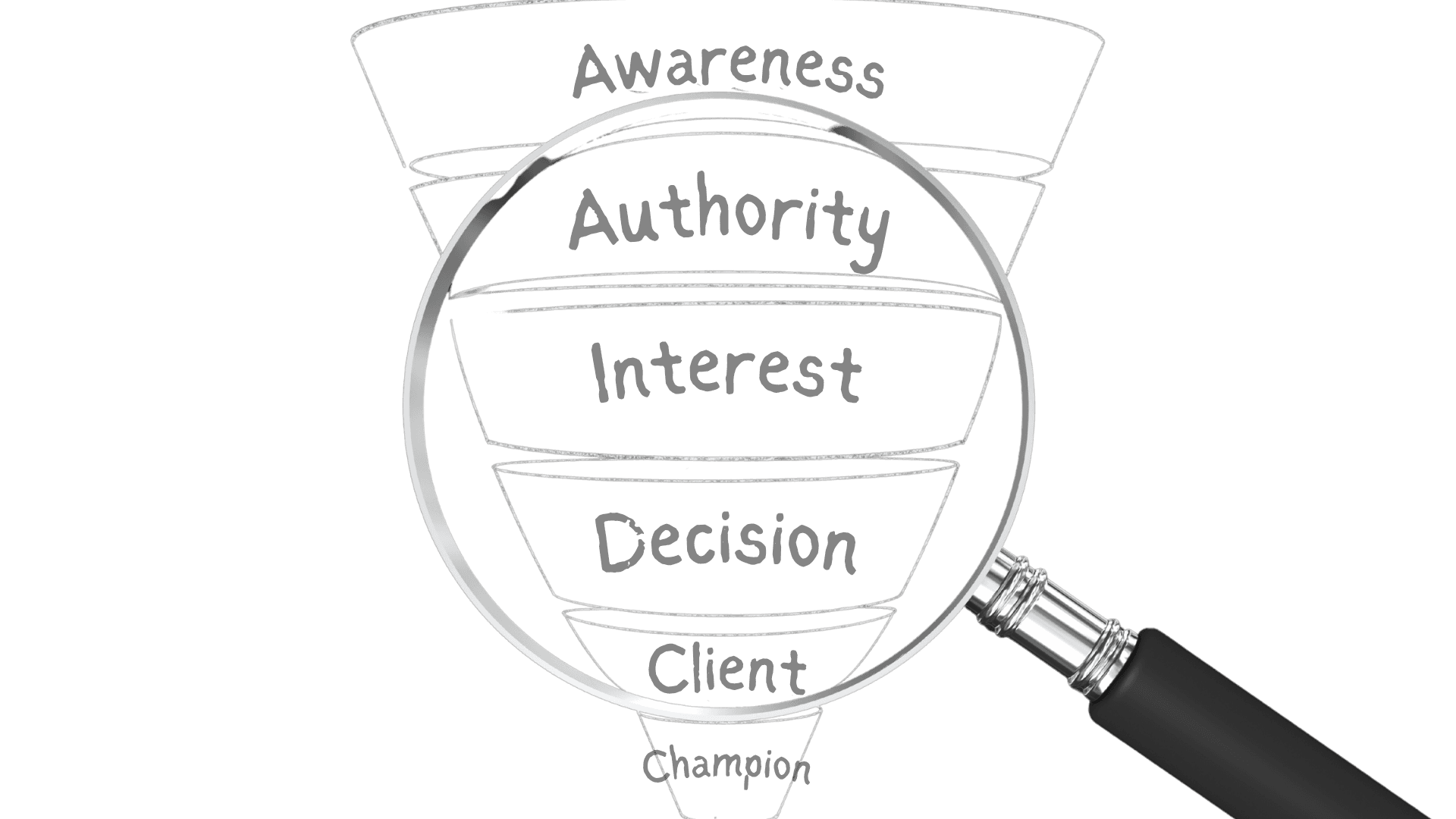
The 3A System is the framework that connects everything — Awareness, Authority, and Acquisition. Three pillars that have to work together or the whole thing leaks.
Most marketing programs sell you one of the three and call it a strategy. Run ads (Awareness without Authority). Do content marketing (Authority without Acquisition). Build a funnel (Acquisition without Awareness). And then business owners wonder why they spent money on something that almost worked.
Almost working is the most expensive outcome in marketing. It costs real money and produces just enough result to make you question yourself instead of questioning the strategy.
Awareness
Awareness is not reach. Reach is a vanity metric — how many people saw something. Awareness is whether the right people saw it, remembered it, and connected it to you specifically.
Most service businesses treat Awareness like a sprint. They run a campaign, see some movement, and stop. Awareness compounds like interest — the first month looks almost identical to not being visible at all. The first three months show traction. The first year produces the kind of recognition where prospects show up on discovery calls saying "I've been following you for a while."
Every piece of Awareness content runs through the Position Test™ before it ships: could your competitor publish this? If the answer is yes — if a prospect could read it and not know whether it came from you or the five other agencies in your market — it goes back for a rewrite. Content without a position is just noise with your logo on it.
Authority
Being seen is step one. Being trusted is step two. And they are not the same step.
Authority is what happens when your ideal clients encounter you enough — in enough specific, honest, useful ways — that by the time they're ready to buy, they already feel like they know you. They're not evaluating you against three other options. They've already decided. They're calling you to confirm what they've already concluded.
That doesn't happen through clever branding. It happens through consistent, specific content that proves you understand their world — their specific problems, their specific fears, the specific reasons they've already tried things that didn't work. Authority is the documentation of expertise, not the claim of it.
Acquisition
Awareness and Authority create the conditions. Acquisition is the infrastructure that captures it.
This is where most businesses have nothing. Leads come in through referrals, get responded to whenever someone gets around to it, and either convert or don't based on timing and luck. No nurture sequence. No systematic follow-up. No pipeline visibility. No way to know where every prospect is or what they need to move forward.
The SIGNAL Method™ is the sales framework built specifically for the UNMISSABLE context — not for cold outreach, but for the warm prospect who has already been in your content ecosystem. It starts from intelligence. What have they read? What's their Diagnostic score? What brought them to this conversation? A sales conversation that starts from context instead of introduction converts at a completely different rate than one that starts from scratch.
When all three pillars run simultaneously — and they have to run simultaneously, not sequentially — the flywheel starts. Awareness builds familiarity. Authority converts familiarity into trust. Acquisition converts trust into revenue. And every month the system runs, it compounds.
How long does it actually take?
Month 1 feels invisible. You're building the foundation. The ICP is documented. The brand voice is calibrated. The content system is set up. Nothing visible is happening yet — but if you skip this month, every subsequent month is built on sand.
Months 2 and 3 feel slow. Content is publishing. Paid distribution is running. You're showing up — but the market hasn't noticed yet. This is where most businesses quit and conclude "content marketing doesn't work." It's working. The flywheel is just still being pushed.
Months 4 through 6 feel different. Prospects start mentioning they've seen your content. Website traffic from organic sources starts climbing. Discovery calls arrive warmer — people who already know who you are and what you stand for. You're at Rung 2 of the Momentum Ladder™. The flywheel has started pulling.
Months 6 through 12 compound. Your content library is building authority in search and in AI. Case studies are documenting proof. Named frameworks are being cited. The pipeline stops feeling like a mystery and starts feeling like a system.
Month 12 and beyond — this is when the gap between you and competitors who didn't build the system becomes visible. Your content is compounding. Theirs is starting from zero. That gap gets wider every month.
There's no shortcut through this. But there is a system that makes sure every month of effort compounds instead of evaporates.
The mistakes that keep service businesses stuck
Treating marketing like a faucet. Turn it on when sales get slow. Turn it off when things get busy. This is how you guarantee feast-or-famine cycles forever. Marketing is a flywheel. It builds through consistent input and loses momentum the second you stop. Every restart costs you everything you built.
Being safe. The fastest path to invisibility in a crowded market is saying what everyone else is saying. Generic positioning doesn't just fail to stand out — it actively contributes to being forgotten. The service businesses that become unmissable take positions. They say things competitors won't say. They have documented beliefs about their industry that their ideal clients recognize as true and their wrong-fit clients reject. Both outcomes are correct.
Measuring the wrong scoreboard. Likes, impressions, follower counts — these are not visibility metrics. They're vanity metrics. They produce dopamine, not pipeline. Real visibility is measured in qualified organic traffic, discovery calls from content, branded search volume, and AI citations. If your scoreboard isn't tied to those things, you're optimizing for the feeling of marketing instead of the result of it.
Waiting for the right time. There is no right time. The pipeline will not stabilize first. Revenue will not hit a specific number first. The team will not be ready first. Every month of waiting is market share handed to whoever isn't waiting. The businesses that will dominate your market in the next 24 months have already started. The window to be one of them is open right now.
Here's what I know after years of building visibility systems for service businesses:
The owners who stay invisible aren't less talented than the ones who dominate their markets. They're not offering an inferior service. They're not missing some secret insight their competitors have.
They're just still waiting for the right moment to build the system.
There is no right moment. There's only the moment you decide the cost of being invisible is higher than the cost of building the thing that fixes it.
If you've read this far, you already know which side of that decision you're on.
Book a free strategy call with reFOCUS. We'll show you exactly where your visibility system is broken, what to build first, and what the path to unmissable looks like for your specific market.
FAQ
Clear Solutions to Your Concerns

Why can't my ideal clients find me online even though I have a website?
How do I get my service business to show up on Google?
What is AEO and why does it matter for service businesses in 2026?
How do I know if my business is visible enough?
Is word-of-mouth enough to grow a service business?
What's the fastest way to increase visibility for my service business?

Get in touch
Let's make you unmissable.

Andrew Scherer
Founder, reFOCUS Marketing
You've read this far because something clicked. Don't let this be another tab you close and forget about. The businesses winning in your market right now aren't better than you. They're just not invisible anymore. That's the only difference — and it's fixable. But not by waiting. Not by trying one more tactic. Not by hoping referrals pick back up. The question isn't whether you need this. You already know the answer to that. The question is whether you're ready to stop being the best-kept secret in your market.
Get in touch
Let's make you unmissable.
Andrew Scherer
Founder, reFOCUS Marketing
You've read this far because something clicked. Don't let this be another tab you close and forget about. The businesses winning in your market right now aren't better than you. They're just not invisible anymore. That's the only difference — and it's fixable. But not by waiting. Not by trying one more tactic. Not by hoping referrals pick back up. The question isn't whether you need this. You already know the answer to that. The question is whether you're ready to stop being the best-kept secret in your market.
Get in touch
Let's make you unmissable.
Andrew Scherer
Founder, reFOCUS Marketing
You've read this far because something clicked. Don't let this be another tab you close and forget about. The businesses winning in your market right now aren't better than you. They're just not invisible anymore. That's the only difference — and it's fixable. But not by waiting. Not by trying one more tactic. Not by hoping referrals pick back up. The question isn't whether you need this. You already know the answer to that. The question is whether you're ready to stop being the best-kept secret in your market.
Your business isn't invisible because the market is too crowded. It's invisible because you haven't built the system that makes you visible.
You're good at what you do. Your clients will tell anyone who asks. Your reputation, inside the circle of people who know you, is solid.
And you're still not growing the way you should be.
That gap — between how good you actually are and how visible you actually are — isn't a mystery. It's not bad luck. It's not a crowded market or a tough economy or the wrong timing.
It's a system failure. Specifically, the absence of one.
I've sat across from hundreds of service business owners who are genuinely excellent at what they do and genuinely stuck. Not because their offer is wrong. Not because their clients don't love them. But because the only people who know they exist are the people who already found them — through a referral, a random connection, or sheer luck.
That's not a business. That's a well-kept secret. And in 2026, being the best-kept secret in your market is the most expensive position you can hold.
What does it actually mean to be invisible?
Not invisible to everyone. That's not the problem.
Your existing clients know you. Your referral network knows you. The people you've already done business with know exactly who you are and what you're worth.
The people you haven't met yet? You don't exist to them.
That's the invisibility that matters. The invisibility that keeps your pipeline dependent on whoever happens to mention your name. The invisibility that has you refreshing your email on a slow Tuesday wondering where the next client is coming from. The invisibility that means when someone in your market is searching for exactly what you do — on Google, on LinkedIn, through an AI assistant — your name never comes up.
Here's what that looks like in practice:
A homeowner in your area needs a roofing contractor. They open their phone and search "who should I hire." They ask a neighbor. They type the question into ChatGPT. They look at Google Maps. Five businesses show up in their world — and not one of them is yours. Not because you're not better than those five. But because those five built the system that puts them in front of people. You didn't.
You lost that client before you ever had a chance to earn them. And you'll never know it happened.
That's what invisibility costs. Not one client. Every client in your market who's actively looking and never finds you.
Why do great service businesses stay invisible?
This is the part nobody wants to say.
It's not the economy. It's not the algorithm. It's not that your competitors have bigger budgets or better connections.
It's that you've been treating marketing like something you do when you have time — and time is the one thing you never have.
You know you should be posting more consistently. You know you should have a real follow-up system. You know you should be showing up on video. You know your Google Business Profile hasn't been touched in months. You know all of this — and the knowing changes nothing because knowing without a system is just guilt with a to-do list.
Most service businesses don't have a marketing problem. They have a structure problem.
Here's what I actually see when I look under the hood:
They're running on referrals and calling it a strategy. Referrals are proof your service is good. They are not a growth engine. They're unpredictable, unscalable, and completely dependent on other people's behavior and timing. When your best referral source gets busy, changes industries, or moves — your pipeline moves with them. You have zero control. That's not a strategy. That's hope with a nice-sounding name.
Their content is sporadic and safe. A post here. A post there. Nothing that takes a real position. Nothing that makes anyone feel anything specific. Content that could belong to any business in any industry — the kind of content that fills a feed without filling a pipeline. The algorithm doesn't reward that. Neither does your audience.
They're invisible in AI search and don't know it. Right now, hundreds of millions of people per week are using ChatGPT, Perplexity, and Google's AI Overviews to research service providers. They're asking "who should I hire for X in my market" and getting answers — before they ever visit a website. If your business hasn't built the kind of structured, specific, authoritative content that AI systems cite, you're losing leads in conversations you don't even know are happening.
They're the bottleneck. If marketing only moves when the founder pushes it — if content only gets created when there's time, if leads only get followed up with when someone remembers — then there is no system. There's a founder doing marketing in the gaps between everything else. That's not scalable. That's a ceiling disguised as a business.
How has AI search changed everything in 2026?
Let me be direct about this because most people are underestimating it.
The way your ideal clients find service providers has fundamentally shifted. Google still matters. But sitting alongside it is a new research behavior that's growing faster than anything we've seen in the last decade.
People are asking AI assistants to do the research for them. Not "give me a list of websites to visit" — but "who should I hire for this, and why." And the AI answers. It synthesizes. It recommends. It compares. It gives a confident response — and the prospect often makes a decision before ever opening a browser tab.
800 million people per week use ChatGPT alone.
If your business isn't being cited in those answers, you're not losing a Google ranking. You're losing the conversation entirely.
What does AI cite? Not the most popular website. Not the biggest ad spender. AI cites the source that most directly, most specifically, most authoritatively answers the question being asked. That means:
Articles structured around the exact questions your clients are asking
Named frameworks and methodologies documented publicly
Content that takes a clear position instead of hedging on every point
FAQ sections that match the natural language of real questions
This is why reFOCUS clients build named frameworks. The Position Test™. The SIGNAL Method™. The Momentum Ladder™. These aren't just branding exercises — they're AI citation assets. When an AI system is asked how to differentiate a service business, and the only documented framework with a specific name and a detailed methodology is the Position Test™, that's what gets cited. That's how you show up in conversations you're not physically present for.
The window to build this — before your competitors in your specific market do — is open right now. It closes market by market as early movers establish themselves. The businesses that move in 2026 will be compounding an advantage in 2027 that their competitors can't easily close.
What is the 3A System and why does it matter?
The 3A System is the framework that connects everything — Awareness, Authority, and Acquisition. Three pillars that have to work together or the whole thing leaks.
Most marketing programs sell you one of the three and call it a strategy. Run ads (Awareness without Authority). Do content marketing (Authority without Acquisition). Build a funnel (Acquisition without Awareness). And then business owners wonder why they spent money on something that almost worked.
Almost working is the most expensive outcome in marketing. It costs real money and produces just enough result to make you question yourself instead of questioning the strategy.
Awareness
Awareness is not reach. Reach is a vanity metric — how many people saw something. Awareness is whether the right people saw it, remembered it, and connected it to you specifically.
Most service businesses treat Awareness like a sprint. They run a campaign, see some movement, and stop. Awareness compounds like interest — the first month looks almost identical to not being visible at all. The first three months show traction. The first year produces the kind of recognition where prospects show up on discovery calls saying "I've been following you for a while."
Every piece of Awareness content runs through the Position Test™ before it ships: could your competitor publish this? If the answer is yes — if a prospect could read it and not know whether it came from you or the five other agencies in your market — it goes back for a rewrite. Content without a position is just noise with your logo on it.
Authority
Being seen is step one. Being trusted is step two. And they are not the same step.
Authority is what happens when your ideal clients encounter you enough — in enough specific, honest, useful ways — that by the time they're ready to buy, they already feel like they know you. They're not evaluating you against three other options. They've already decided. They're calling you to confirm what they've already concluded.
That doesn't happen through clever branding. It happens through consistent, specific content that proves you understand their world — their specific problems, their specific fears, the specific reasons they've already tried things that didn't work. Authority is the documentation of expertise, not the claim of it.
Acquisition
Awareness and Authority create the conditions. Acquisition is the infrastructure that captures it.
This is where most businesses have nothing. Leads come in through referrals, get responded to whenever someone gets around to it, and either convert or don't based on timing and luck. No nurture sequence. No systematic follow-up. No pipeline visibility. No way to know where every prospect is or what they need to move forward.
The SIGNAL Method™ is the sales framework built specifically for the UNMISSABLE context — not for cold outreach, but for the warm prospect who has already been in your content ecosystem. It starts from intelligence. What have they read? What's their Diagnostic score? What brought them to this conversation? A sales conversation that starts from context instead of introduction converts at a completely different rate than one that starts from scratch.
When all three pillars run simultaneously — and they have to run simultaneously, not sequentially — the flywheel starts. Awareness builds familiarity. Authority converts familiarity into trust. Acquisition converts trust into revenue. And every month the system runs, it compounds.
How long does it actually take?
Month 1 feels invisible. You're building the foundation. The ICP is documented. The brand voice is calibrated. The content system is set up. Nothing visible is happening yet — but if you skip this month, every subsequent month is built on sand.
Months 2 and 3 feel slow. Content is publishing. Paid distribution is running. You're showing up — but the market hasn't noticed yet. This is where most businesses quit and conclude "content marketing doesn't work." It's working. The flywheel is just still being pushed.
Months 4 through 6 feel different. Prospects start mentioning they've seen your content. Website traffic from organic sources starts climbing. Discovery calls arrive warmer — people who already know who you are and what you stand for. You're at Rung 2 of the Momentum Ladder™. The flywheel has started pulling.
Months 6 through 12 compound. Your content library is building authority in search and in AI. Case studies are documenting proof. Named frameworks are being cited. The pipeline stops feeling like a mystery and starts feeling like a system.
Month 12 and beyond — this is when the gap between you and competitors who didn't build the system becomes visible. Your content is compounding. Theirs is starting from zero. That gap gets wider every month.
There's no shortcut through this. But there is a system that makes sure every month of effort compounds instead of evaporates.
The mistakes that keep service businesses stuck
Treating marketing like a faucet. Turn it on when sales get slow. Turn it off when things get busy. This is how you guarantee feast-or-famine cycles forever. Marketing is a flywheel. It builds through consistent input and loses momentum the second you stop. Every restart costs you everything you built.
Being safe. The fastest path to invisibility in a crowded market is saying what everyone else is saying. Generic positioning doesn't just fail to stand out — it actively contributes to being forgotten. The service businesses that become unmissable take positions. They say things competitors won't say. They have documented beliefs about their industry that their ideal clients recognize as true and their wrong-fit clients reject. Both outcomes are correct.
Measuring the wrong scoreboard. Likes, impressions, follower counts — these are not visibility metrics. They're vanity metrics. They produce dopamine, not pipeline. Real visibility is measured in qualified organic traffic, discovery calls from content, branded search volume, and AI citations. If your scoreboard isn't tied to those things, you're optimizing for the feeling of marketing instead of the result of it.
Waiting for the right time. There is no right time. The pipeline will not stabilize first. Revenue will not hit a specific number first. The team will not be ready first. Every month of waiting is market share handed to whoever isn't waiting. The businesses that will dominate your market in the next 24 months have already started. The window to be one of them is open right now.
Here's what I know after years of building visibility systems for service businesses:
The owners who stay invisible aren't less talented than the ones who dominate their markets. They're not offering an inferior service. They're not missing some secret insight their competitors have.
They're just still waiting for the right moment to build the system.
There is no right moment. There's only the moment you decide the cost of being invisible is higher than the cost of building the thing that fixes it.
If you've read this far, you already know which side of that decision you're on.
Book a free strategy call with reFOCUS. We'll show you exactly where your visibility system is broken, what to build first, and what the path to unmissable looks like for your specific market.
FAQ
Clear Solutions to Your Concerns
Why can't my ideal clients find me online even though I have a website?
How do I get my service business to show up on Google?
What is AEO and why does it matter for service businesses in 2026?
How do I know if my business is visible enough?
Is word-of-mouth enough to grow a service business?
What's the fastest way to increase visibility for my service business?
Get in touch
Let's make you unmissable.
Andrew Scherer
Founder, reFOCUS Marketing
You've read this far because something clicked. Don't let this be another tab you close and forget about. The businesses winning in your market right now aren't better than you. They're just not invisible anymore. That's the only difference — and it's fixable. But not by waiting. Not by trying one more tactic. Not by hoping referrals pick back up. The question isn't whether you need this. You already know the answer to that. The question is whether you're ready to stop being the best-kept secret in your market.
Get in touch
Let's make you unmissable.
Andrew Scherer
Founder, reFOCUS Marketing
You've read this far because something clicked. Don't let this be another tab you close and forget about. The businesses winning in your market right now aren't better than you. They're just not invisible anymore. That's the only difference — and it's fixable. But not by waiting. Not by trying one more tactic. Not by hoping referrals pick back up. The question isn't whether you need this. You already know the answer to that. The question is whether you're ready to stop being the best-kept secret in your market.
Get in touch
Let's make you unmissable.
Andrew Scherer
Founder, reFOCUS Marketing
You've read this far because something clicked. Don't let this be another tab you close and forget about. The businesses winning in your market right now aren't better than you. They're just not invisible anymore. That's the only difference — and it's fixable. But not by waiting. Not by trying one more tactic. Not by hoping referrals pick back up. The question isn't whether you need this. You already know the answer to that. The question is whether you're ready to stop being the best-kept secret in your market.
Your business isn't invisible because the market is too crowded. It's invisible because you haven't built the system that makes you visible.
You're good at what you do. Your clients will tell anyone who asks. Your reputation, inside the circle of people who know you, is solid.
And you're still not growing the way you should be.
That gap — between how good you actually are and how visible you actually are — isn't a mystery. It's not bad luck. It's not a crowded market or a tough economy or the wrong timing.
It's a system failure. Specifically, the absence of one.
I've sat across from hundreds of service business owners who are genuinely excellent at what they do and genuinely stuck. Not because their offer is wrong. Not because their clients don't love them. But because the only people who know they exist are the people who already found them — through a referral, a random connection, or sheer luck.
That's not a business. That's a well-kept secret. And in 2026, being the best-kept secret in your market is the most expensive position you can hold.
What does it actually mean to be invisible?
Not invisible to everyone. That's not the problem.
Your existing clients know you. Your referral network knows you. The people you've already done business with know exactly who you are and what you're worth.
The people you haven't met yet? You don't exist to them.
That's the invisibility that matters. The invisibility that keeps your pipeline dependent on whoever happens to mention your name. The invisibility that has you refreshing your email on a slow Tuesday wondering where the next client is coming from. The invisibility that means when someone in your market is searching for exactly what you do — on Google, on LinkedIn, through an AI assistant — your name never comes up.
Here's what that looks like in practice:
A homeowner in your area needs a roofing contractor. They open their phone and search "who should I hire." They ask a neighbor. They type the question into ChatGPT. They look at Google Maps. Five businesses show up in their world — and not one of them is yours. Not because you're not better than those five. But because those five built the system that puts them in front of people. You didn't.
You lost that client before you ever had a chance to earn them. And you'll never know it happened.
That's what invisibility costs. Not one client. Every client in your market who's actively looking and never finds you.
Why do great service businesses stay invisible?
This is the part nobody wants to say.
It's not the economy. It's not the algorithm. It's not that your competitors have bigger budgets or better connections.
It's that you've been treating marketing like something you do when you have time — and time is the one thing you never have.
You know you should be posting more consistently. You know you should have a real follow-up system. You know you should be showing up on video. You know your Google Business Profile hasn't been touched in months. You know all of this — and the knowing changes nothing because knowing without a system is just guilt with a to-do list.
Most service businesses don't have a marketing problem. They have a structure problem.
Here's what I actually see when I look under the hood:
They're running on referrals and calling it a strategy. Referrals are proof your service is good. They are not a growth engine. They're unpredictable, unscalable, and completely dependent on other people's behavior and timing. When your best referral source gets busy, changes industries, or moves — your pipeline moves with them. You have zero control. That's not a strategy. That's hope with a nice-sounding name.
Their content is sporadic and safe. A post here. A post there. Nothing that takes a real position. Nothing that makes anyone feel anything specific. Content that could belong to any business in any industry — the kind of content that fills a feed without filling a pipeline. The algorithm doesn't reward that. Neither does your audience.
They're invisible in AI search and don't know it. Right now, hundreds of millions of people per week are using ChatGPT, Perplexity, and Google's AI Overviews to research service providers. They're asking "who should I hire for X in my market" and getting answers — before they ever visit a website. If your business hasn't built the kind of structured, specific, authoritative content that AI systems cite, you're losing leads in conversations you don't even know are happening.
They're the bottleneck. If marketing only moves when the founder pushes it — if content only gets created when there's time, if leads only get followed up with when someone remembers — then there is no system. There's a founder doing marketing in the gaps between everything else. That's not scalable. That's a ceiling disguised as a business.
How has AI search changed everything in 2026?
Let me be direct about this because most people are underestimating it.
The way your ideal clients find service providers has fundamentally shifted. Google still matters. But sitting alongside it is a new research behavior that's growing faster than anything we've seen in the last decade.
People are asking AI assistants to do the research for them. Not "give me a list of websites to visit" — but "who should I hire for this, and why." And the AI answers. It synthesizes. It recommends. It compares. It gives a confident response — and the prospect often makes a decision before ever opening a browser tab.
800 million people per week use ChatGPT alone.
If your business isn't being cited in those answers, you're not losing a Google ranking. You're losing the conversation entirely.
What does AI cite? Not the most popular website. Not the biggest ad spender. AI cites the source that most directly, most specifically, most authoritatively answers the question being asked. That means:
Articles structured around the exact questions your clients are asking
Named frameworks and methodologies documented publicly
Content that takes a clear position instead of hedging on every point
FAQ sections that match the natural language of real questions
This is why reFOCUS clients build named frameworks. The Position Test™. The SIGNAL Method™. The Momentum Ladder™. These aren't just branding exercises — they're AI citation assets. When an AI system is asked how to differentiate a service business, and the only documented framework with a specific name and a detailed methodology is the Position Test™, that's what gets cited. That's how you show up in conversations you're not physically present for.
The window to build this — before your competitors in your specific market do — is open right now. It closes market by market as early movers establish themselves. The businesses that move in 2026 will be compounding an advantage in 2027 that their competitors can't easily close.
What is the 3A System and why does it matter?
The 3A System is the framework that connects everything — Awareness, Authority, and Acquisition. Three pillars that have to work together or the whole thing leaks.
Most marketing programs sell you one of the three and call it a strategy. Run ads (Awareness without Authority). Do content marketing (Authority without Acquisition). Build a funnel (Acquisition without Awareness). And then business owners wonder why they spent money on something that almost worked.
Almost working is the most expensive outcome in marketing. It costs real money and produces just enough result to make you question yourself instead of questioning the strategy.
Awareness
Awareness is not reach. Reach is a vanity metric — how many people saw something. Awareness is whether the right people saw it, remembered it, and connected it to you specifically.
Most service businesses treat Awareness like a sprint. They run a campaign, see some movement, and stop. Awareness compounds like interest — the first month looks almost identical to not being visible at all. The first three months show traction. The first year produces the kind of recognition where prospects show up on discovery calls saying "I've been following you for a while."
Every piece of Awareness content runs through the Position Test™ before it ships: could your competitor publish this? If the answer is yes — if a prospect could read it and not know whether it came from you or the five other agencies in your market — it goes back for a rewrite. Content without a position is just noise with your logo on it.
Authority
Being seen is step one. Being trusted is step two. And they are not the same step.
Authority is what happens when your ideal clients encounter you enough — in enough specific, honest, useful ways — that by the time they're ready to buy, they already feel like they know you. They're not evaluating you against three other options. They've already decided. They're calling you to confirm what they've already concluded.
That doesn't happen through clever branding. It happens through consistent, specific content that proves you understand their world — their specific problems, their specific fears, the specific reasons they've already tried things that didn't work. Authority is the documentation of expertise, not the claim of it.
Acquisition
Awareness and Authority create the conditions. Acquisition is the infrastructure that captures it.
This is where most businesses have nothing. Leads come in through referrals, get responded to whenever someone gets around to it, and either convert or don't based on timing and luck. No nurture sequence. No systematic follow-up. No pipeline visibility. No way to know where every prospect is or what they need to move forward.
The SIGNAL Method™ is the sales framework built specifically for the UNMISSABLE context — not for cold outreach, but for the warm prospect who has already been in your content ecosystem. It starts from intelligence. What have they read? What's their Diagnostic score? What brought them to this conversation? A sales conversation that starts from context instead of introduction converts at a completely different rate than one that starts from scratch.
When all three pillars run simultaneously — and they have to run simultaneously, not sequentially — the flywheel starts. Awareness builds familiarity. Authority converts familiarity into trust. Acquisition converts trust into revenue. And every month the system runs, it compounds.
How long does it actually take?
Month 1 feels invisible. You're building the foundation. The ICP is documented. The brand voice is calibrated. The content system is set up. Nothing visible is happening yet — but if you skip this month, every subsequent month is built on sand.
Months 2 and 3 feel slow. Content is publishing. Paid distribution is running. You're showing up — but the market hasn't noticed yet. This is where most businesses quit and conclude "content marketing doesn't work." It's working. The flywheel is just still being pushed.
Months 4 through 6 feel different. Prospects start mentioning they've seen your content. Website traffic from organic sources starts climbing. Discovery calls arrive warmer — people who already know who you are and what you stand for. You're at Rung 2 of the Momentum Ladder™. The flywheel has started pulling.
Months 6 through 12 compound. Your content library is building authority in search and in AI. Case studies are documenting proof. Named frameworks are being cited. The pipeline stops feeling like a mystery and starts feeling like a system.
Month 12 and beyond — this is when the gap between you and competitors who didn't build the system becomes visible. Your content is compounding. Theirs is starting from zero. That gap gets wider every month.
There's no shortcut through this. But there is a system that makes sure every month of effort compounds instead of evaporates.
The mistakes that keep service businesses stuck
Treating marketing like a faucet. Turn it on when sales get slow. Turn it off when things get busy. This is how you guarantee feast-or-famine cycles forever. Marketing is a flywheel. It builds through consistent input and loses momentum the second you stop. Every restart costs you everything you built.
Being safe. The fastest path to invisibility in a crowded market is saying what everyone else is saying. Generic positioning doesn't just fail to stand out — it actively contributes to being forgotten. The service businesses that become unmissable take positions. They say things competitors won't say. They have documented beliefs about their industry that their ideal clients recognize as true and their wrong-fit clients reject. Both outcomes are correct.
Measuring the wrong scoreboard. Likes, impressions, follower counts — these are not visibility metrics. They're vanity metrics. They produce dopamine, not pipeline. Real visibility is measured in qualified organic traffic, discovery calls from content, branded search volume, and AI citations. If your scoreboard isn't tied to those things, you're optimizing for the feeling of marketing instead of the result of it.
Waiting for the right time. There is no right time. The pipeline will not stabilize first. Revenue will not hit a specific number first. The team will not be ready first. Every month of waiting is market share handed to whoever isn't waiting. The businesses that will dominate your market in the next 24 months have already started. The window to be one of them is open right now.
Here's what I know after years of building visibility systems for service businesses:
The owners who stay invisible aren't less talented than the ones who dominate their markets. They're not offering an inferior service. They're not missing some secret insight their competitors have.
They're just still waiting for the right moment to build the system.
There is no right moment. There's only the moment you decide the cost of being invisible is higher than the cost of building the thing that fixes it.
If you've read this far, you already know which side of that decision you're on.
Book a free strategy call with reFOCUS. We'll show you exactly where your visibility system is broken, what to build first, and what the path to unmissable looks like for your specific market.
FAQ
Clear Solutions to Your Concerns
Why can't my ideal clients find me online even though I have a website?
How do I get my service business to show up on Google?
What is AEO and why does it matter for service businesses in 2026?
How do I know if my business is visible enough?
Is word-of-mouth enough to grow a service business?
What's the fastest way to increase visibility for my service business?
Get in touch
Let's make you unmissable.
Andrew Scherer
Founder, reFOCUS Marketing
You've read this far because something clicked. Don't let this be another tab you close and forget about. The businesses winning in your market right now aren't better than you. They're just not invisible anymore. That's the only difference — and it's fixable. But not by waiting. Not by trying one more tactic. Not by hoping referrals pick back up. The question isn't whether you need this. You already know the answer to that. The question is whether you're ready to stop being the best-kept secret in your market.
Get in touch
Let's make you unmissable.
Andrew Scherer
Founder, reFOCUS Marketing
You've read this far because something clicked. Don't let this be another tab you close and forget about. The businesses winning in your market right now aren't better than you. They're just not invisible anymore. That's the only difference — and it's fixable. But not by waiting. Not by trying one more tactic. Not by hoping referrals pick back up. The question isn't whether you need this. You already know the answer to that. The question is whether you're ready to stop being the best-kept secret in your market.
Get in touch
Let's make you unmissable.
Andrew Scherer
Founder, reFOCUS Marketing
You've read this far because something clicked. Don't let this be another tab you close and forget about. The businesses winning in your market right now aren't better than you. They're just not invisible anymore. That's the only difference — and it's fixable. But not by waiting. Not by trying one more tactic. Not by hoping referrals pick back up. The question isn't whether you need this. You already know the answer to that. The question is whether you're ready to stop being the best-kept secret in your market.