Resources / Hiring a Marketing Team
Is hiring a marketing agency worth it for a small business?


The short answer
Hiring a marketing agency is worth it for a small business when you hire the right agency at the right time. The right agency asks about your sales process before it pitches you, leaves you owning everything it builds, and fits how you actually operate, and the right time is when two of three things are true: your hours cost more than the help, you have proof something sells, and your sales side can handle more.
If you've been running your own marketing, or doing it with a freelancer, here's how I'd make that call, what I'd do if the answer is "not yet", and how I'd tell at 90 days whether the money is coming back.
Key takeaways
- Listen to what an agency talks about. If it's deliverables, keep looking. If it's your growth, keep talking.
- Three tests for any agency: does it ask about your sales process, will you own what it builds, and does it fit how you work?
- A dry pipeline is the wrong time to hire anyone. Fix your own flow of new business first.
- Doing it yourself costs your hours, your consistency and every inquiry nobody follows up.
- At 90 days, look at your pipeline and ask one question: if you fired them tomorrow, what would you lose?
When hiring a marketing agency pays back
Most of the businesses we work with are good at what they do. They run on referrals and the owner's hustle, and marketing happens as a random act: a post here, a boosted ad there, a website nobody has touched. Inquiries come in, but nobody follows up consistently, and if you asked where the last ten clients came from, the honest answer would probably be referrals. Growth depends on the owner doing everything.
The idea that more marketing is always the answer couldn't be further from the truth. Connecting marketing to sales with one system the business owns is what changes things: the CRM, the follow-up automations, and content that answers the questions prospects keep asking. Then the team feeds back what they hear on calls, so the marketing keeps getting sharper.
The biggest shift comes when growth stops depending on the owner, or on any single person on the team. The business now has an asset it owns. I see that with almost every business we work with, so I won't single one out.
Three tests I'd put to any agency
- Does it ask about your sales process before it pitches you marketing? Marketing's whole job is to make your sales team's job easier. An agency that never asks how inquiries get followed up, what your close rate is or what your salespeople hear from prospects is selling you activity. The right one wants that feedback loop, because it drives the content, the funnels and the conversions.
- Will you own what it builds? Ask straight out: if we part ways, what do I keep? The website, the CRM, the automations, the content, the ad accounts and the data should all be yours, so every dollar adds to an asset. A lot of small businesses are renting their customers from platforms and agencies.
- Does it fit how you actually operate? Some owners need a team to take everything. Some have someone in-house who just needs coaching. Most need something in between. An agency with only one box to put you in is fitting you to its model.
If an agency passes all three, you're talking about growth.
Awareness pays back at any size
Awareness campaigns are critical, and video campaigns are the best of them. In my opinion, our brains can't tell a video on your phone apart from a celebrity on TV, which is why influencers exist. Post video organically, then put ad spend behind the posts that perform best. It doesn't have to be much.
One client of ours shows what steady video can do. Alex Yu is a top-producing Orange County, CA real estate agent. His results with us include a weekly short-form video system, strangers who began recognizing Alex from his content, and a $13.30 cost per lead from paid social. Those are his results in his market, and your own will depend on your market and your offer. Read how Alex built consistent visibility.
When it isn't worth it yet, including with us
An owner came to me with a dry pipeline. All they wanted was leads. That is never the right reason to hire an agency, and it's never the right timing either.
A dry pipeline means inconsistent or no revenue coming in, so hiring an agency adds risk to the business. If there's one more bad month, the agency gets let go and the business starts over from scratch. My advice was to hold off on an agency. I spent an hour with them going through how to set up their own Meta ads to bring in more inquiries, and I sent them exactly what to do to follow up, down to the cadence.
If that sounds like you, here are five signs it's too early to work with us, and what to do until the timing is right.
What to do while you're not ready
The next six months can get you ready, on your own or with a freelancer. Start with three pieces of work:
- Video, video, video.
- Your name, address and phone number match everywhere you show up online.
- Reviews and your Google Business Profile. When you ask for reviews, the rules say ask every customer the same way, not only the happy ones, and offer nothing in return. This isn't legal advice. Check anything specific with your compliance lead.
Beyond those, build the habit of simple, strategic marketing:
- Set yearly goals.
- Break them into quarterly milestones.
- Choose your message for each month.
- Map your content week by week.
- Stop posting at random.
- Give everything you send a purpose: awareness, authority or acquisition.
For more ways to do this without adding hours, see how to improve your marketing without adding more to your plate. If you'd like a starting point, the free diagnostic shows how you show up on Google, the map and AI assistants next to your top three competitors.
Should you hire an agency or do it yourself?
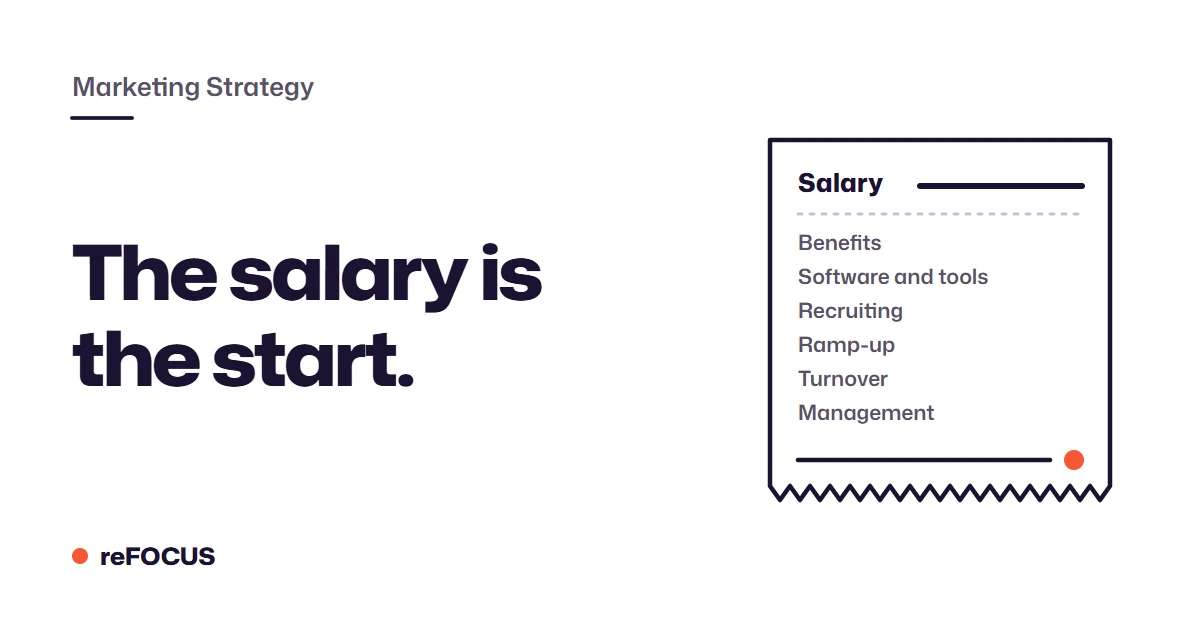
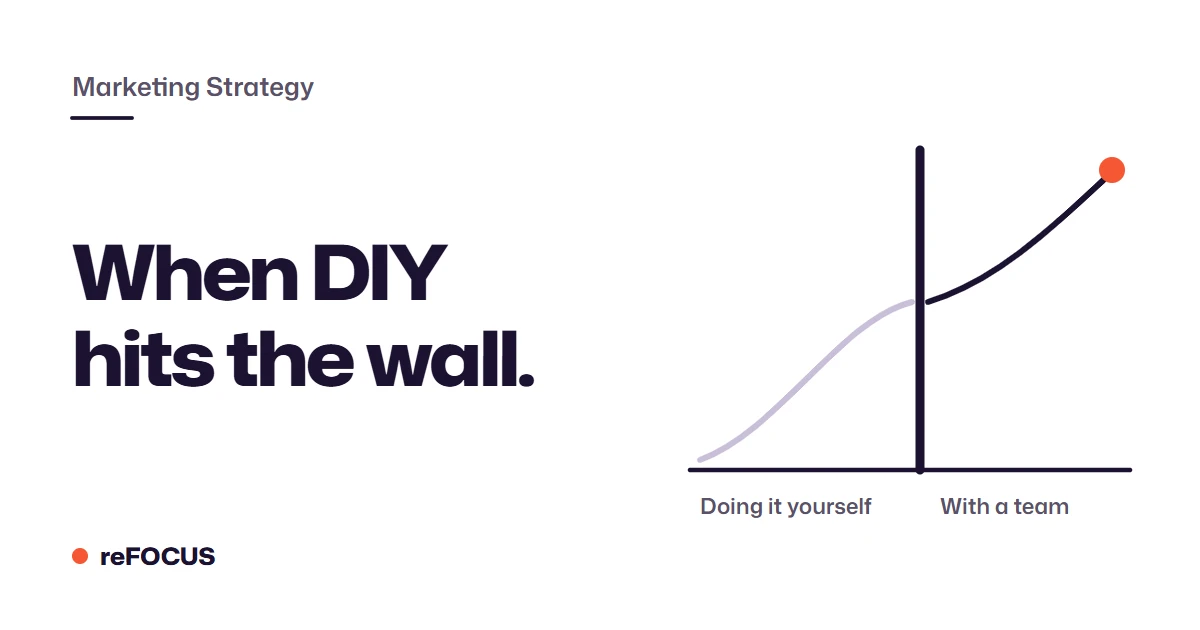
Doing it yourself is always an option. It just isn't free. You pay in things that never show up on an invoice.
- Your hourly rate. Every hour fighting with Canva or boosting a post is an hour you're not selling, serving clients or leading your team. As an example, if your time is worth $200 an hour and marketing eats ten hours a week, you're spending about $8,000 a month on it. You just never see the bill.
- Inconsistency. Owner-run marketing happens when things are slow. Business picks up, the marketing stops, and three months later the pipeline dries up. That feast-and-famine cycle is the most expensive part, and nobody counts it.
- Inquiries that leak. The bigger cost is usually the follow-up that never happens. Someone reaches out, nobody calls back within five minutes, there's no nurture, and they go to whoever responded first.
- What you don't know you don't know. You can learn to run ads, but you learn on your own budget. Every mistake a pro would have avoided is tuition.
- Nothing compounds. Random posts don't build into anything. A real system of content, CRM, automations and data gets more valuable every month, and DIY usually starts from zero each time you come back to it.
The question to ask yourself is what it's costing you to run without a system.
| Option | What it really costs you | What it needs from you | When it fits |
|---|---|---|---|
| Doing it yourself | Your hours, stop-start marketing, and inquiries nobody follows up | Time every week, and learning on your own budget | It's always an option, once you count what it costs |
| A freelancer | Their fee, plus your time managing them | A strategy you already have, and someone to brief them and check the work | A specific job with a clear finish line, or testing something on a tight budget |
| Coaching or a part-time marketing leader | Their fee, while you or your team do the work | People who can execute and need direction | You have hands but no strategy |
| An agency | Its fee, plus ad spend | Clear goals and feedback from your sales side | You need content, ads, website, CRM, follow-up and sales feedback working together |
If you're weighing a full-time hire too, here's what an in-house marketing team costs and a side-by-side of your four options for marketing a service business.
When a freelancer is the better call
Hire a freelancer when you know exactly what you need and you just need hands to do it: a logo, a website refresh, video editing, blog posts. You already know who you're targeting, what you're saying and how it ties to sales, and someone on your side knows what to ask for.
An agency makes more sense when the pieces need connecting and nobody on your team has the time or skill to hold the strategy. The tell is when you've stitched three or four freelancers together and become the project manager for your own marketing. At that point you've hired yourself as the agency, and the savings are gone.
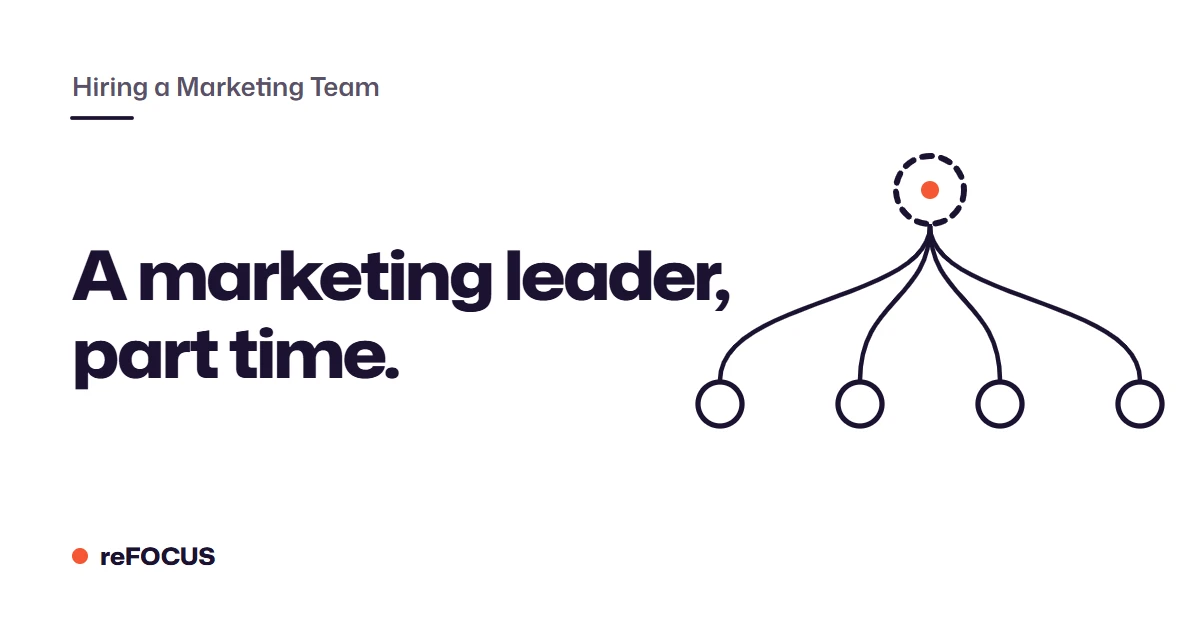
There's also a middle path: get coached, or bring in a part-time marketing leader for the strategy, and let freelancers or your own team do the work. A lot of owners do best right there.
My rule of thumb on timing and budget
Revenue alone doesn't decide it. I look for three signals, and when two are true, it's time:
- Your time costs more than the help. If the hours you spend on marketing are worth more than an agency's fee, you're already overpaying. In my experience that happens sooner than owners expect.
- You've got proof something works. A service people buy, a few happy clients, and some way you've won business before, whether that's referrals, a post that landed or an ad that worked. An agency is great at scaling what works and expensive for finding out whether your offer works at all.
- Your sales side can handle more. If more inquiries showed up tomorrow, would someone follow up fast and close them? If not, fix that first, or hire an agency that helps with it too. Pouring inquiries into a leaky bucket is the fastest way to decide marketing doesn't work.
On dollars, Web Strategies found that in 2018 B2C service companies spent 11.8% of revenue on marketing and B2B service companies 6.9%, as the SBA's blog reported in July 2019. Those are averages, and averages include businesses that are only maintaining.
If what you can put into marketing can't cover a real agency plus some ad spend, you're probably better off with coaching to make your own efforts smarter, or a mix where someone guides you and you do the work. The right time to get help is usually earlier than people think. The right kind of help depends on where you are. There's more on how much a service business should spend on marketing.
How to tell at 90 days whether your agency is paying back
Look at your pipeline first. An agency that's only keeping busy reports activity, and the partner you want reports outcomes against the goals you set together.
Ninety days is usually too early to judge the full return, especially for SEO or content. It's plenty of time to tell whether you're headed somewhere. I'd look at four things:
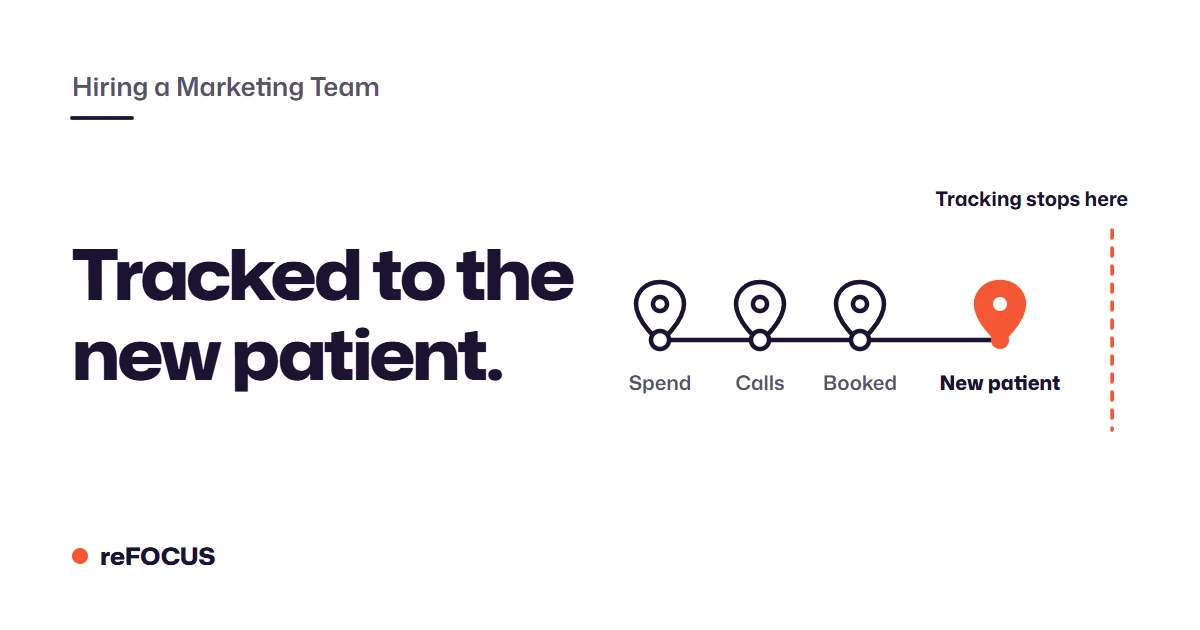
- Can they tie their work to your pipeline? Likes, impressions and "we posted 12 times" don't count. Ask how many inquiries came in, where they came from, how many became sales conversations and how many closed. If the agency can't show you that path, you have your answer.
- Are the early numbers moving? Before revenue shows up, you should see better-qualified inquiries, faster follow-up, better show rates on calls and a lower cost per lead.
- What do you own now that you didn't 90 days ago? A website that converts, a CRM that's actually set up, follow-up automations, content you can reuse. Those keep working after the invoice is paid.
- Does your sales team feel the difference? This is the one I see skipped. Ask your salespeople whether prospects show up already knowing who you are, and whether the calls are easier. If sales hasn't noticed anything, marketing isn't doing its job yet.
The warning signs are reports full of activity with no outcomes, a different excuse every month, and still not knowing where your last ten clients came from. The simplest test is to ask what you'd lose if you fired them tomorrow. If the answer is "not much", you know.
For what a fair pace looks like, see the 12-month marketing timeline and the five marketing metrics that matter.
If you decide yes, settle these before you sign
Owners who got burned by an agency tell me the same few stories.
- They were sold a package. The agency had one standard monthly box, and the owner went into it whether it fit or not. Before you sign, notice whether the agency asked a lot of questions about your business, your sales process and your goals. If the proposal could go to any business with the name swapped, walk away.
- Nobody agreed on what success looked like. Six months in, the agency says it's going great and the owner says nothing has changed. Both are right, because they measured different things. Put the goals in writing before signing: inquiries, cost per lead, sales conversations, revenue.
- The agency owned everything. The owner leaves and finds the agency controls the ad account, the website, the domain or the CRM. Everything should be in your name from day one, with the agency given access.
- The salesperson disappeared after the contract. The owner met a sharp strategist on the sales call and got handed to a junior account manager. Ask who will actually do the work, and meet them before you sign.
- Marketing was cut off from sales. The agency threw inquiries over the wall, follow-up was slow and everyone blamed everyone else. A real partner asks what happens after someone reaches out, because that's where the money is.
- A long contract with no early proof. Ask what you should see at 30, 60 and 90 days. A confident agency will tell you, and won't need a 12-month contract to keep you.
Most of these happen when an owner who needed a partner hires a vendor. The questions you ask before signing tell you which one you're getting. For the full picking process, see how to pick a small business marketing agency.
Frequently asked questions
Do I need a marketing agency for my small business?
You need one when two of three things are true: your time costs more than the help, you have proof something sells, and your sales side can handle more. Until then, build the basics yourself or with a freelancer.
Why hire a marketing agency instead of doing it myself?
Doing it yourself costs your hours, stops whenever you get busy, and lets inquiries slip through without follow-up. A good agency builds one connected system that you own and that gets more valuable every month.
Should I hire a freelancer or an agency?
Hire a freelancer for a specific job with a clear finish line when you already have the strategy. Hire an agency when the pieces need to work together and nobody on your team can hold the strategy.
How much should a small business spend on marketing?
In 2018, B2C service companies spent 11.8% of revenue on marketing and B2B service companies 6.9% (Web Strategies, reported on the SBA's blog in July 2019).
When should a small business hire a marketing agency?
Usually earlier than owners think, and never while the pipeline is dry. Here's more on when hiring a marketing team makes sense for a small business.
How long before I know an agency is working?
Ninety days is usually too early for the full return, especially from SEO or content. By then you should be able to see where your inquiries came from, whether the early numbers are moving, and what you now own.
Want a plan like this for your business?
Run the free diagnostic. It takes a few minutes, and you'll see a six-month plan with the price.
Book a callWant a plan like this for your business? Run the free diagnostic. It takes about 10 minutes.