Resources / Marketing Strategy
How to get more patients in your practice


The short answer
To get more patients, first find out why you need them, where your patients come from today and where people fall out before they book or after their first visit. Then set the number of new patients you can handle, the budget to bring them in, and a plan built for your practice.
That's the order I work in with an owner who tells me they need more patients. I'm going to walk them through an assessment, and I start with understanding why. Are they expanding locations, adding practitioners, or going through a slow time right now? I want to know what they're going through and why.
After that, I want to know where their patients typically come from right now, especially if there's an immediate need. I want to know what's worked, what hasn't, and where people are falling through on the way from first hearing about the practice to becoming a patient. Then we go through how many patients, what they're able to realistically handle, and their budget to make that happen. We then lay out the plans for that specific practice.
Key takeaways
- Start with why you need more patients and where they come from now, before you spend more.
- In Tebra's January 2026 survey of 805 patients, about half named each of insurance portals, word of mouth, other doctors' referrals and Google as a way they find providers.
- Find where patients drop out. In the same survey, 54% had dropped a doctor after one visit.
- Ask for reviews early and often, from every patient, and never tell them what to say.
- We say it takes 90 days to build a baseline and 180 days to build momentum.
How patients choose a practice now
Patients find a practice in four main ways. In Tebra's survey of 805 patients in January 2026, the top sources were "Insurance portals (50%)," "Word of mouth (50%)," "Referrals from other doctors (50%)," and "Google (48%)". Smaller shares named "walk-in or urgent care clinics (20%), platforms like Zocdoc (12%), social media (10%)" "and generative AI tools like ChatGPT (7%)." Tebra sells practice software, and its survey page doesn't state how the sample was drawn.
So the first job is to find out which of those is working for your practice today. When I look at a small practice for the first time, this is what we gather:
- Stories from the folks at the office.
- Any data and reporting the practice can give us from the previous 30, 60 and 90 days, and then the last 12 months.
- Its socials and wider digital presence: YouTube, Google, LinkedIn, Facebook and Instagram, TikTok and the rest.
- An audit of any ads it's running.
- An idea of how many patients come through as referrals.
We try to attribute some form of DNA to each patient's starting source, so we can see which source is the most efficient and profitable.
Before you spend anything, find where you lose patients
More marketing does little for a practice that loses people between the search and the booked appointment, or after the first visit. Tebra's January 2026 survey puts numbers on how often that happens:
- "54% of patients have dropped a doctor after just one visit."
- "Nearly 1 in 5 patients (17%) said the inability to book online would strongly push them to switch doctors."
- "75% of patients would prefer a textable office number over in-person support."
Where patients drop out
Tebra survey, January 2026
A practice came to us wanting more marketing. When we looked, this is what we found:
- Disjointed messaging, with no strategy to speak of.
- A Google Business Profile that was a hot mess.
- Ads that were absolute fluff.
- Reports from their agency based on vanity metrics, with nothing even remotely close to tying the marketing to new patients, revenue or retention.
- Worst of all, the brand felt like AI was writing everything they had. Some of it was good, but it wasn't who they were as a practice.
Those are the gaps to find before you add a dollar of spend.
How to attract new patients: be found where they look
In Tebra's January 2026 survey, 48% of patients named Google as a way they find providers, and 7% named generative AI tools like ChatGPT. Of the 251 providers Tebra surveyed, "Over one-quarter (28%) said appearing in AI-generated search results was a top or moderate priority for 2026".
When a practice does good work and stays invisible online, the first thing I do is build awareness and authority and drive home the story of who they are. I want the owner to share all the reasons they built the practice. I want them to share success stories, as much as compliance will allow, and I want patients to tell their stories as much as they're comfortable. And I want to lead through video every step of the way. Video, both short form and long form, is the fastest and most effective way to build awareness and authority.
One rule comes with that. Any patient's story, photo or video used in your marketing needs that patient's signed HIPAA authorization.
On November 7, 2026, we asked four AI assistants (ChatGPT, Perplexity, Gemini and Claude) three questions a patient near St. Joseph, Missouri might ask:
- "Who is the best orthopedic surgeon in St. Joseph, Missouri?"
- "Where should I go for orthopedic urgent care in St. Joseph, MO?"
- "I hurt my knee playing basketball. Where can I get it looked at in St. Joseph, Missouri?"
We asked each question twice in each assistant, with web search on, for 24 answers in total. Our client OSMC, a 40-year orthopedic practice in St. Joseph, was named in 22 of the 24. Its website was cited in all 24, including the two answers that listed surgeons without naming the practice.
That's one practice in one town on one day, and AI answers change from run to run. The full test and the steps behind it are in how to get your business recommended by ChatGPT. To see where your own practice stands, the free diagnostic takes a few minutes.
How to get more patient reviews, within the rules
In Tebra's January 2026 survey, "30% of patients have avoided or dropped a doctor because of a negative online review."
My advice on asking is early and often. We don't steer them on what to say, and we want them to tell their story: how they connected with the practice, why they decided to go, what hesitations and questions they had, how the practice made them feel, why they picked it and where they are now. The story is what resonates emotionally, and the emotion is where other people connect.
The rules a practice has to keep:
- Ask every patient, in the same way, so you never ask only the happy ones.
- Never offer anything in return for a review, and never write or buy one.
- Read the FTC's Consumer Reviews and Testimonials Rule, which "went into effect on October 21, 2024". The FTC explains what it covers in its questions and answers page.
- When you reply to a review, never confirm the person is a patient, even when the review is glowing.
This isn't legal advice. Check anything specific with your compliance lead.
How to increase patient referrals, and how to depend on them less
Referrals carry a lot of weight. In Tebra's survey, half of patients named "Word of mouth" and half named "Referrals from other doctors" as ways they find a provider.
When an owner tells me nearly all their patients come from referrals, my first answer is that's great. It's a phenomenal place to start, and it's where a lot of other practices would love to be. It means they've delivered care to their patients at such a high level that people already love them.
Now we simply need to get in front of more people and tell the story. After the story is out there, we look at how to lower the cost of each new patient and what we can do to attract even more happy patients to the practice.
Before you set up anything that rewards people for sending you patients, talk to your compliance lead. This isn't legal advice.
The ways to get patients, compared
Here are the ways a practice gets new patients, side by side.
When a practice tells me it has a few hours a week and not much money, I want to clarify what they mean by "not much money". Is it 1% of revenue? Is it 3%? What's their goal for growth, and where do they need to be?
Then we come up with the plan that makes the most sense for them. That might mean we start with community outreach and organic content, then evolve into video view funnels and work on relationships, reviews and referrals. It all comes down to what their true budget is and whether it lines up with their growth goals.
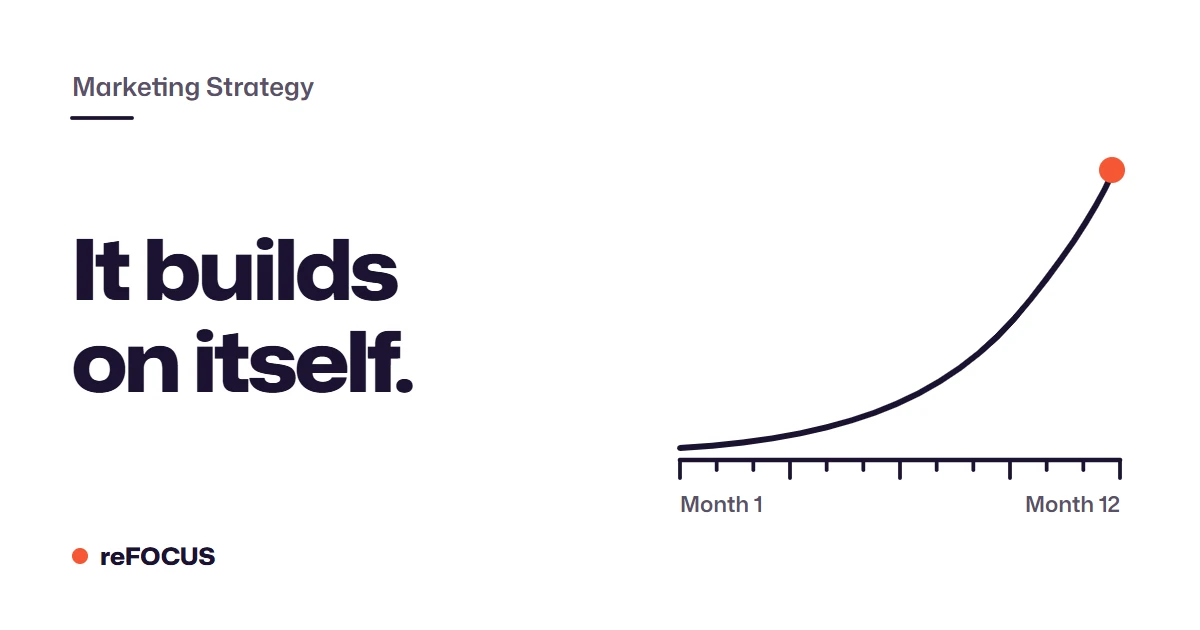
How long until the front desk notices? We've seen some practices feel the results in as little as 30 days. Marketing done right, without BS strategies and smokescreens, is a long-term strategy, though. We say it takes 90 days to build a baseline and 180 days to build momentum.
A worked example: an orthopedic practice in St. Joseph, Missouri
OSMC (Orthopedic & Sports Medicine Center) is "A 40-year orthopedic practice in St. Joseph, Missouri, trusted locally but hard to find online."
What changed, from the approved case study and our dated check:
- Facebook views +366% (47.1K to 219.7K), all in 32 days.
- Follower growth +420% and content interactions +5,100%, in the same 32 days.
- HurtAPP, the practice's online intake tool for patients: landing page traffic +97% and patient registrations +29%.
- When we searched on November 2, 2026, OSMC was first in Google's local results for "orthopedic surgeon St. Joseph MO".
- On the same day, ChatGPT recommended OSMC surgeons first when asked who to see for orthopedic care in St. Joseph.
- Warm audience of 20,800+ Northwest Missouri residents through a 3-tier Meta funnel on $165 total ad spend.
OSMC, a 40-year orthopedic practice in St. Joseph, Missouri
Approved case study and our November 2, 2026 check
- +366% Facebook views47.1K to 219.7K, in 32 days
- +420% Follower growthThe same 32 days
- +5,100% Content interactionsThe same 32 days
- +97% HurtAPP landing page trafficHurtAPP is the practice's online intake tool for patients
- +29% HurtAPP patient registrationsA rise in registrations. The case study gives no count of new patients
- 20,800+ Northwest Missouri residents in a warm audienceA 3-tier Meta funnel on $165 total ad spend
- First in Google's local resultsFor "orthopedic surgeon St. Joseph MO"Searched November 2, 2026
- ChatGPT recommended OSMC surgeons firstAsked who to see for orthopedic care in St. Joseph, November 2, 2026
The limits, plainly. This is one orthopedic practice with 40 years of local trust behind it, over 32 days in its first phase. The 29% is a rise in registrations, and the case study gives no count of new patients or revenue.
The part I'd tell a small practice to copy is the content day. Plan one content day a month. Have fun with it, and get photos, video, b-roll and everything else to stockpile content for the next month, long form and short form. And don't forget to let people get to know you and your story.
“They took the time to learn our specific software and how it works, so our marketing strategy is built around what we actually do. … Our business now shows up in both Google and AI search results. It's nice to have a marketing partner we can trust.” Cheryl Kidwell, CEO, Orthopedic & Sports Medicine Center
Frequently asked questions
How can doctors get more patients?
Start with why you need more patients and where your current ones come from. Then find where people drop out before they book or after the first visit, and fix that before you add spend. The plan comes after, sized to how many new patients you can handle.
How do I get more patients to my clinic?
Be easy to find where patients look. In Tebra's 2026 survey, 48% named Google. Keep your Google Business Profile accurate and active, collect reviews from every patient, and tell your story on video so people know who you are before they call.
How do I get new patients for a new practice?
I encourage a new practice to stay lean on its marketing until it has solid revenue. First, know who your ideal patients are, in depth, because they're who your marketing message speaks to: age, family, life, symptoms, concerns, problems, aspirations, what they do for fun, all of it. Then create content that shows who you are and why you care, and post it 3 to 5 times a week, video and static. Post another 3 to 4 times a week with content that eases their concerns or solves their problems. Say things in ways only you can say them, and don't be afraid of being bold with your position.
How do I get more patients without a large advertising budget?
First, put a number on the budget. Is it 1% of revenue or 3%, and does it line up with your goal for growth? A small budget might start with community outreach and organic content, then move into video view funnels, relationships, reviews and referrals.
How long does it take to get more patients?
We've seen some practices feel the results in as little as 30 days. We say it takes 90 days to build a baseline and 180 days to build momentum.
What is patient acquisition, and how do I increase patient volume?
Patient acquisition is the business term for how a practice gets new patients. To increase patient volume, find which of the ways in the comparison table above is weak for you, and where patients drop out between finding you and coming back.
Can a local practice show up in ChatGPT's answers?
It can. In our test, a 40-year local practice was named in 22 of 24 answers in its town. That is one practice on one day, and AI answers change from run to run. The test and the steps are in how to get your business recommended by ChatGPT.
Sources
- Tebra, "How Patients Choose and Drop Doctors in a Digital-First Healthcare System", 805 patients and 251 providers, January 2026, updated February 25, 2026: https://www.tebra.com/theintake/healthcare-reports/how-patients-choose-and-drop-doctors-digital-care
- Federal Trade Commission, "The Consumer Reviews and Testimonials Rule: Questions and Answers", November 2024: https://www.ftc.gov/business-guidance/resources/consumer-reviews-testimonials-rule-questions-answers
- U.S. Department of Health and Human Services, HIPAA guidance on marketing: https://www.hhs.gov/hipaa/for-professionals/privacy/guidance/marketing/index.html
- reFOCUS AI test, November 7, 2026: 3 questions, 4 assistants (ChatGPT, Perplexity, Gemini, Claude), 2 runs each, web search on, run through the DataForSEO AI Optimization API
Find where your practice is losing patients
The diagnostic looks at your own practice. It's at refocusmarketing.com/diagnostic.
Want a plan like this for your business?
Run the free diagnostic. It takes a few minutes, and you'll see a six-month plan with the price.
Book a callWant a plan like this for your business? Run the free diagnostic. It takes about 10 minutes.