Resources / Marketing Strategy
Medical practice marketing plan: what to do first


The short answer
A medical practice marketing plan starts with goals: a three-year vision, a target for next year, and that target broken into quarterly and monthly milestones. Then you pick three strategies for each month of the first quarter and turn them into the weekly and daily work that has to happen to hit the number.
That's the order I walk a practice through. This article is for the administrator, COO or managing physician who has to bring next year's plan to the partners. I'll cover what goes on each page, what we did first with one orthopedic practice, how I set a budget with a group's leadership, and the number that tells you the plan is working.
Key takeaways
- Start from goals. A three-year vision sets next year's target, and that target is split into quarters (using your own history for seasonality), then months, weeks and days.
- Look at where your patients come from and where they drop out before you buy anything. In one practice we started with, the bigger gap was strategy, and inconsistent marketing was a symptom of it.
- Before the ads, have three things in place: someone to handle every inquiry, a system for turning inquiries into patients, and organic content running alongside.
- I treat 1% of revenue as the floor and 3% to 5% as where a practice should be, with more during a push such as a new location, a new service or a new doctor.
- Judge the plan by cost per acquisition. Improve it with the conversion rate between each stage a patient moves through.
Why next year's plan has to earn its budget
If you run a medical group, you already feel the squeeze. In a June 23, 2026 MGMA Stat poll, 84% of medical groups said year-to-date operating costs were higher than at the same point in 2025 (251 responses), and those whose costs rose put the average increase at about 11%. A week later, MGMA reported that the share of groups with flat or falling revenue had risen from 43% to 50% (221 responses). MGMA runs these as quick polls of medical group leaders, so read them as a sign of the year you're planning for.
Group leaders said it plainly in MGMA's write-up. One wrote: "Larger clinic volume combined with declining payment per CPT code made for flat revenue." Another: "Annual increase in salaries, reimbursements not increasing but operating costs are." The groups whose revenue grew most often pointed to "straightforward volume growth". More patients is where marketing has a job to do.
Here's what I see partners get wrong in that spot. Marketing is usually the first thing on the chopping block, when they should be looking at it as the solution.
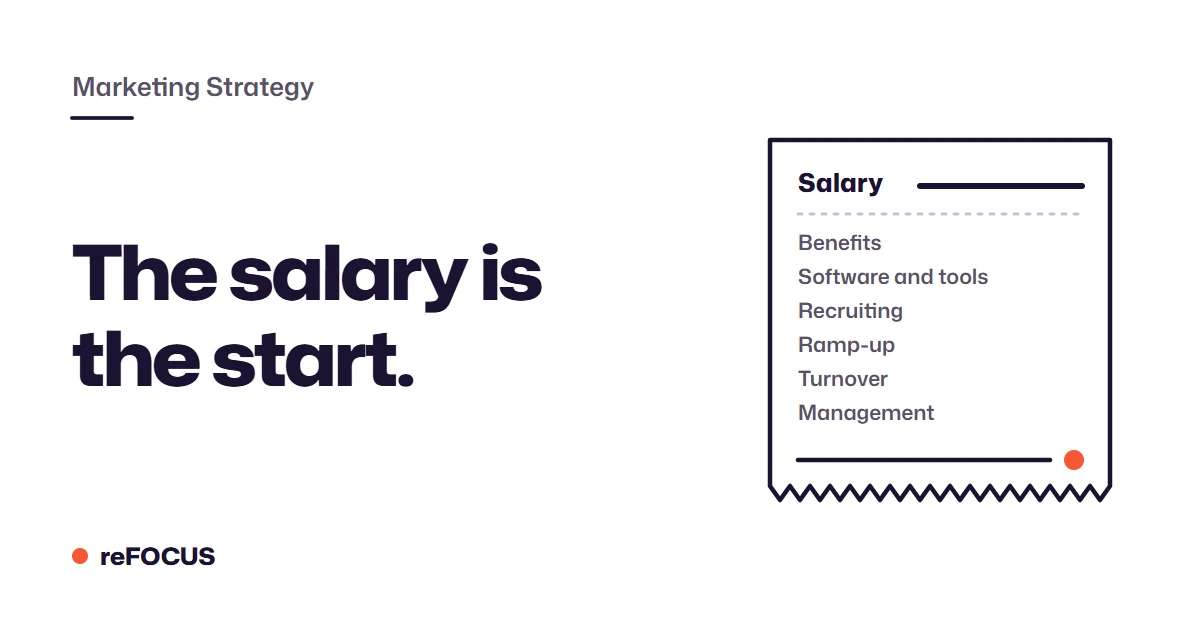
I understand why. Most practices have had the same experience: fluffy marketing that reports vanity numbers, with no system tied to revenue. Practices get that because it's what agencies that only want to provide services have sold them. Delivering the services is the easy part, especially in the world of AI enablement. What's hard is being accountable for the real performance the marketing drives for the practice. A plan you put in front of the partners should be built around that.
Start with the goal, then the people who decide
Goals, goals and more goals. Without a clear target, your actions will fall flat every time. Here's how I build the first page of the plan:
- A three-year vision. I know that seems a long way out. From there, you stop guessing where you need to be next year.
- Next year's target, taken from that vision.
- Quarterly milestones. Use your own historic data so seasonality is accounted for.
- Monthly milestones inside each quarter.
- Three strategies for each month of the first quarter. Pick the ones that, carried out, will hit or beat the target whatever happens.
- Weekly tactics that absolutely must happen, then the daily ones.
That's a lot to take in. It's worth putting in place before you start, so you don't chase shiny objects once you're executing. Before you settle the number, check it against how many new patients your providers and front desk can realistically handle, and the budget it will take to bring them in.
Then decide who is in the room. With a group, the collective sum is greater than any one person in the practice. Each doctor brings good perspective and insight, and nothing beats collaboration and doctors building each other up.
We've talked with practices that wanted to feature certain doctors and leave out the full depth of their practitioners. For the group's brand and story, that's a big mistake. One doctor's perspective might win over a potential patient while another's puts that same patient off. Those collective efforts and insights are one of the biggest reasons a patient chooses a group. If every doctor is part of the practice's story, every doctor deserves to be part of its marketing.
Find where patients come from and where they drop out
Before you fund anything, get a baseline. When I look at a practice for the first time, I start with stories from the people at the office. Then I ask for any data and reports from the previous 30, 60 and 90 days, and I look at the last 12 months. I go through the practice's social accounts and its wider online presence (YouTube, Google, LinkedIn, Facebook, Instagram, TikTok) and audit any ads it's running.
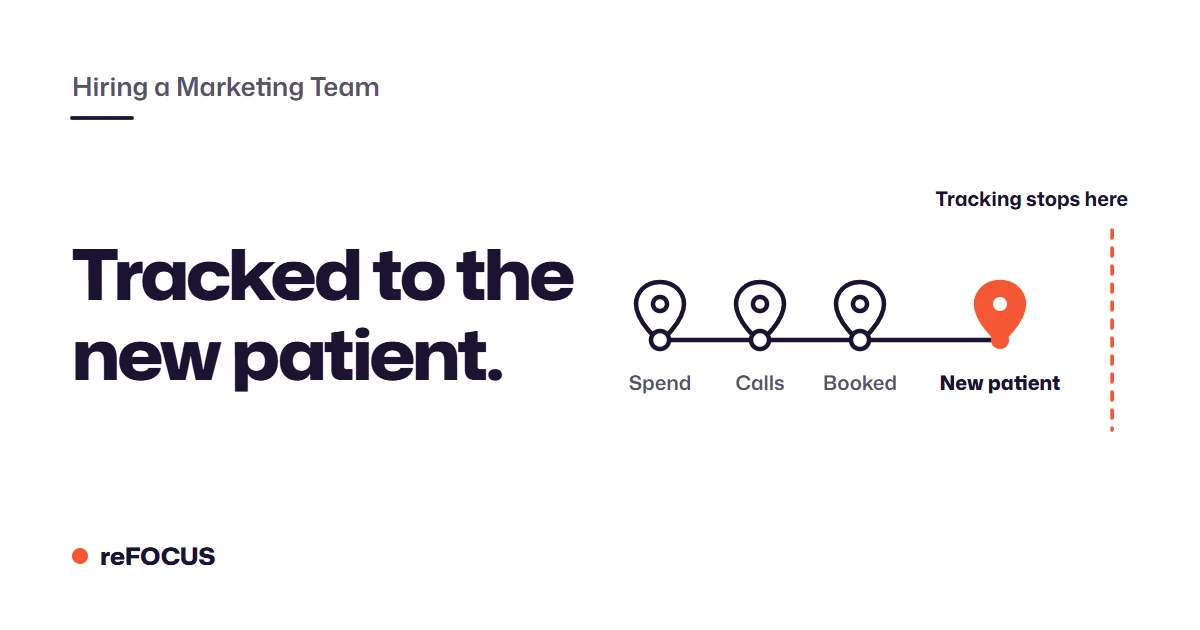
I also want a sense of how many patients arrive as referrals, and I try to trace each patient back to the source where they started. That shows which source is the most efficient and the most profitable. Along the way, you're looking for what's worked, what hasn't, and where people fall out between first hearing of you and becoming a patient.
In one practice we started with, the first look found something other than what the partners expected. The practice thought its problem was execution, meaning how consistently its marketing went out. That was part of it, but the bigger issue was a lack of strategy. Because there was no strategy, the marketing had no consistency, no direction and no depth.
If you want the longer version of this check for a single practice, it's in how to get more patients in your practice.
What to do first: one practice's first 32 days
OSMC is a 40-year orthopedic practice in St. Joseph, Missouri, trusted locally but hard to find online. Here's the order we worked in.
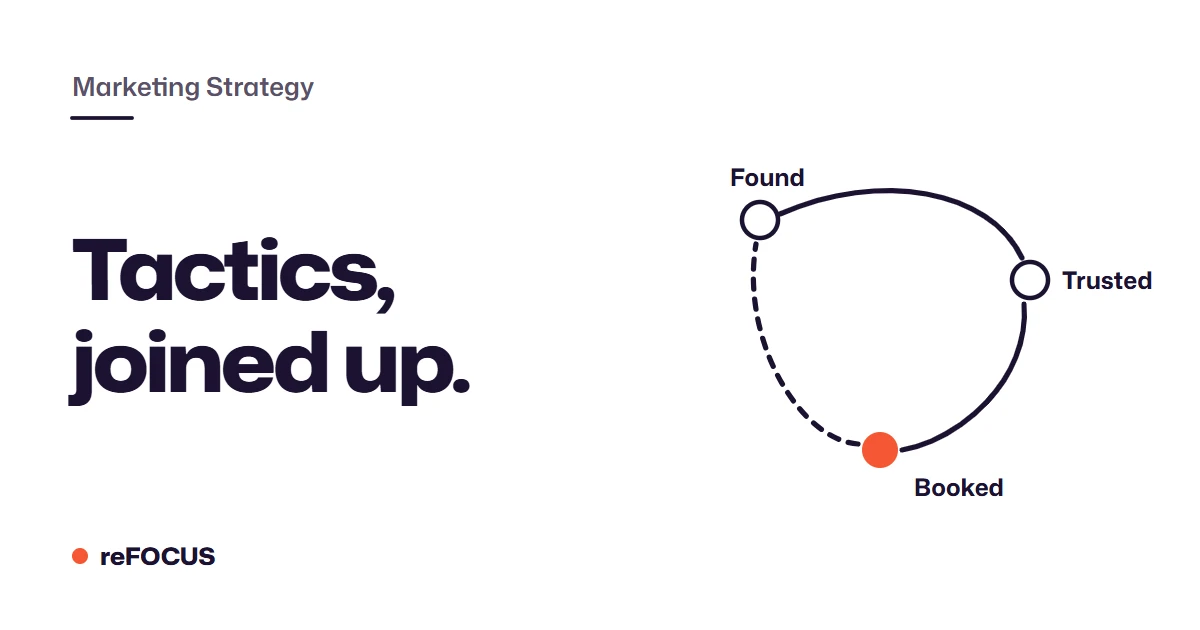
Week one: targets and a full picture. We set the targets and got a full grasp of who the practice is, what makes it different and every way a patient comes into it. That meant an in-depth look at everything it had going on: how people found it, why they'd trust it and how they became patients.
Next: what's working. We assessed what was working, what wasn't, and what needed to work so the practice hit its goals and we could move away from vanity-driven marketing.
What was already in place: a website, a Google Business Profile, reviews and some ads, with another agency handling social media and a few other services.
Straight away: video. We got them on video right away, scheduled the first filming day and started putting short-form video out. I'd tell any practice to plan one filming day a month: have fun with it, and get the photos, video and b-roll to stock up the next month's long-form and short-form content.
Phase 1 results, as the case study reports them:
- Facebook views +366% (47.1K to 219.7K), all in 32 days
- Follower growth +420%
- Content interactions +5,100%
- Instagram views +2,160% from a near-dormant baseline
- HurtAPP, the practice's online intake tool for patients: landing page traffic +97% and patient registrations +29%
Later readings:
- When we searched on November 2, 2026, OSMC was first in Google's local results for "orthopedic surgeon St. Joseph MO".
- On the same day, ChatGPT recommended OSMC surgeons first when asked who to see for orthopedic care in St. Joseph.
"They took the time to learn our specific software and how it works, so our marketing strategy is built around what we actually do. … Our business now shows up in both Google and AI search results. It's nice to have a marketing partner we can trust." Cheryl Kidwell, CEO, Orthopedic & Sports Medicine Center
The limits, plainly: this is one orthopedic practice in the first phase of its work with us. Registrations are a count of sign-ups, so they say nothing on their own about new patients or revenue, and your practice won't necessarily see the same. The full OSMC case study has the detail.
OSMC's first 32 days: the order of work, then the results
32 days, Phase 1
- Week one: targets and a full pictureWho the practice is, what makes it different, every way a patient comes in
- Next: what's workingWhat worked, what didn't, what had to work to hit the goals
- Straight away: videoFirst filming day scheduled, short-form video going out
Before the ads: three things to have in place
Most groups want inquiries flowing right away, which usually means starting ads. I believe in quick wins, and ads are one of the easiest ways to get inquiries and interest fast. To make sure you aren't just burning cash, three things come first:
- someone willing and able to handle every inquiry
- a system that turns those inquiries into patients
- a commitment to organic content that reinforces the ads
Today's patients will see an ad, but they need to trust you before they fill out a form, download something or call. In my experience that takes 8 to 24 touch points, organic and paid.
One more thing I'd put in every practice's plan: video, Google Business Profile, and posting on social media far more often than you think is necessary. If being on camera is the sticking point, this is why video matters for a service business.
How much a medical practice should spend on marketing
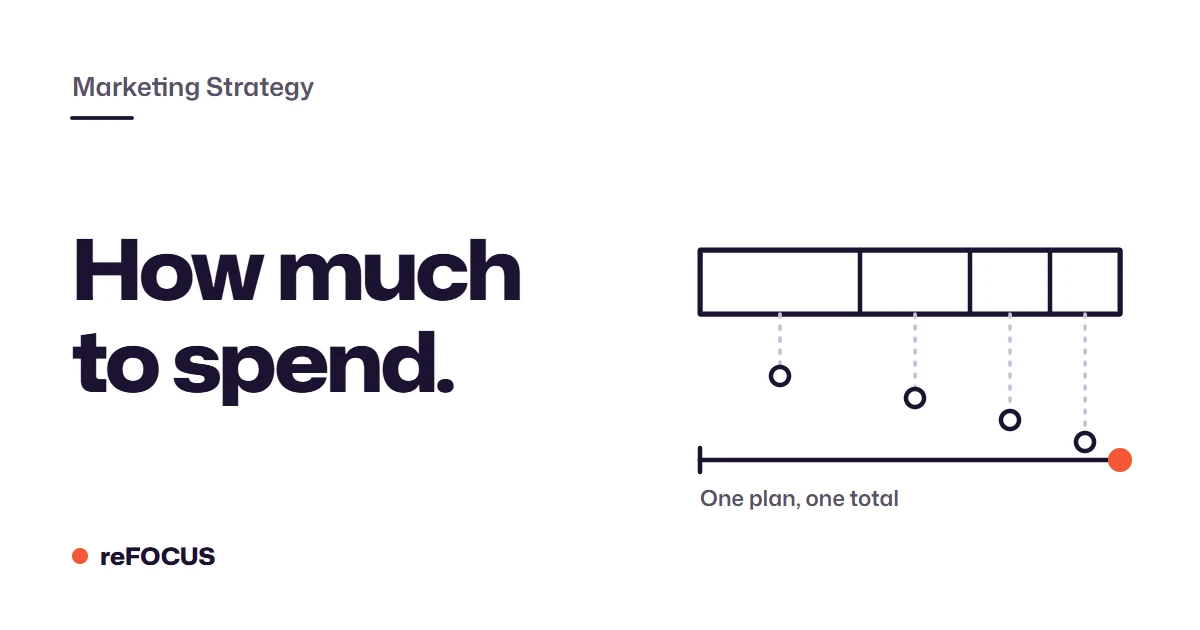
With a group, settling the budget is an in-depth conversation with the leadership. I treat 1% of revenue as the baseline. If a practice is under that, we see what we can do to get it there. 3% to 5% is where a practice really should be, and more than that during a campaign sprint, such as opening a new office, adding a service or bringing in a new doctor.
For comparison, the one survey I'd cite comes from Tebra, a practice software company. In its November 2023 survey of 106 private practices, almost all of them owner-run, "Most practices (62%) allocate a conservative 1%-5% of their gross revenue to marketing budgets", and the next group (14%) spent 6% to 10%. It's small, three years old and not about groups, and the ranges other pages publish disagree with each other.
Where your marketing budget should sit
Share of gross revenue
Tebra survey, November 2023, 106 respondents. The rule above it is ours, from this article.
If you want a priced plan for your own practice to put beside these numbers, the free diagnostic builds a six-month plan with the price. For how spending changes as a business grows, see how much a service business should spend on marketing.
Who runs the plan: your marketer, an agency, or both
Many practices already have someone. In the same Tebra survey, "it's most common (44%) to have a single private practice staff member dedicated to marketing", 21% had two, and 18% had no in-house marketing support.
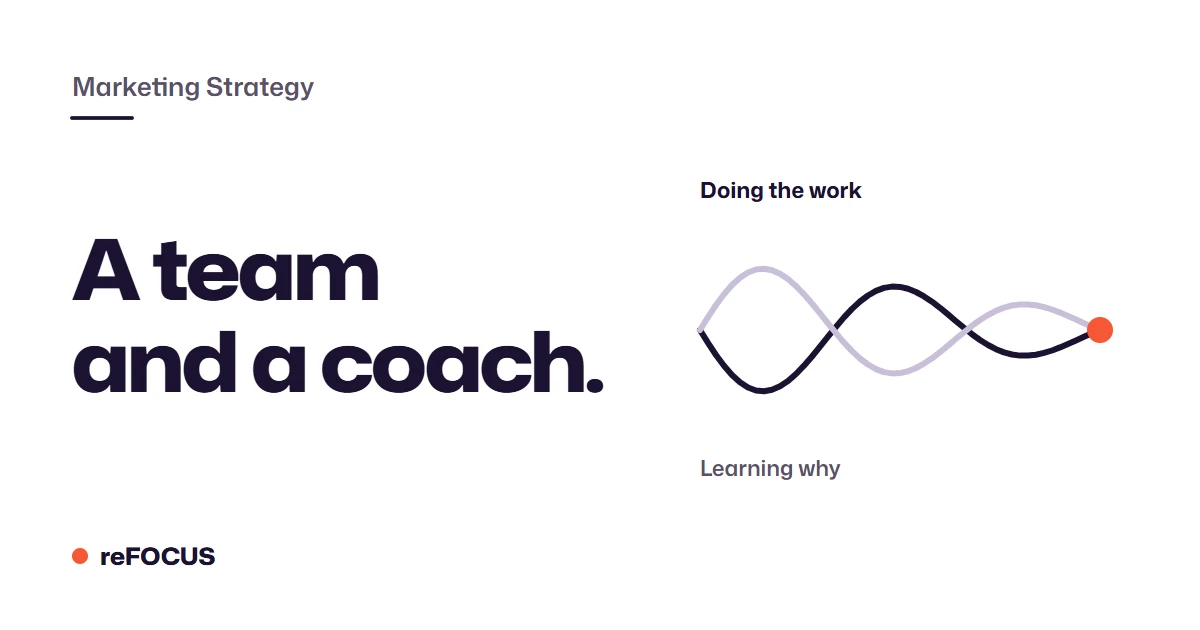
If you have one marketer, we play to their strengths and fill the gaps. Those gaps are usually strategy, paid media and SEO. Marketers in that seat can usually get the hang of social media and email.
If your marketer is more senior, the gap tends to be conversions, metrics and long-term strategy, and they can lose sight of what's happening day to day on social and in email. If you're weighing a hire against outside help, here's what an in-house marketing team costs.
How to tell whether the plan is working
Partners still like to see the vanity numbers, because they feel good. The focus belongs on three things:
- Cost per lead, or the cost of whatever the first sign-up is
- Cost per acquisition, what each new patient costs
- Conversion rates at each stage of a patient's path, from first inquiry to patient
Cost per acquisition is the number that tells you the plan is working. To improve it, we look at the conversion rate between each stage.
In Tebra's November 2023 survey of 106 practices, "New patient acquisition (48%) was the top response" for how practices measure marketing's return, and 21% did no return analysis at all. For which numbers to drop, see the marketing metrics that matter.
The marketing plan on one page
Fill it in, in this order
Frequently asked questions
How much should a medical practice spend on marketing?
I treat 1% of revenue as the baseline and 3% to 5% as where a practice should be. Spend more during a campaign sprint, such as a new location, service or doctor. In Tebra's 2023 survey of 106 practices, 62% put 1% to 5% of gross revenue into marketing.
How long before a marketing plan shows results?
We've seen some practices feel results in as little as 30 days. Done right, marketing is a long-term strategy. We say it takes 90 days to build a baseline and 180 days to build momentum. There's more on this in our honest marketing timeline.
Should a practice hire a marketer or an agency?
It depends on who you already have. A single marketer usually handles social media and email well, and needs help with strategy, paid media and SEO. A senior marketer more often needs help with conversions, metrics and long-term strategy.
One marketing plan, or one per location?
I've seen it work both ways, depending on the practice. There's also a hybrid: one overall strategy for all the locations, plus a plan for each location that builds a strong presence in its own neighborhood.
How do I grow a medical practice when costs are rising?
Keep marketing in the plan and hold it to revenue. Set the target first, find where patients drop out, then fund the strategies that close the biggest gap, measured by cost per acquisition. Our medical marketing page shows how we run that for practices.
Can a practice show up in ChatGPT's answers?
Yes. We ran a test on November 7, 2026. In our test, a 40-year local practice was named in 22 of 24 answers in its town. Here's how to get your business recommended by ChatGPT.
Get a six-month plan for your practice
The diagnostic shows how your practice appears on Google, the map and AI assistants next to your top three competitors, then lays out a six-month plan you can take to the partners.
Want a plan like this for your business?
Run the free diagnostic. It takes a few minutes, and you'll see a six-month plan with the price.
Book a callWant a plan like this for your business? Run the free diagnostic. It takes about 10 minutes.